The 90-Day Career Development Plan: A Framework for Getting Promoted, Pivoting, or Leveling Up
Career growth without a plan is drift. Here's the 90-day framework that turns vague career ambition into concrete skill milestones — with templates for each phase.

Kareeo Team
Career Content Team · · 10 min read
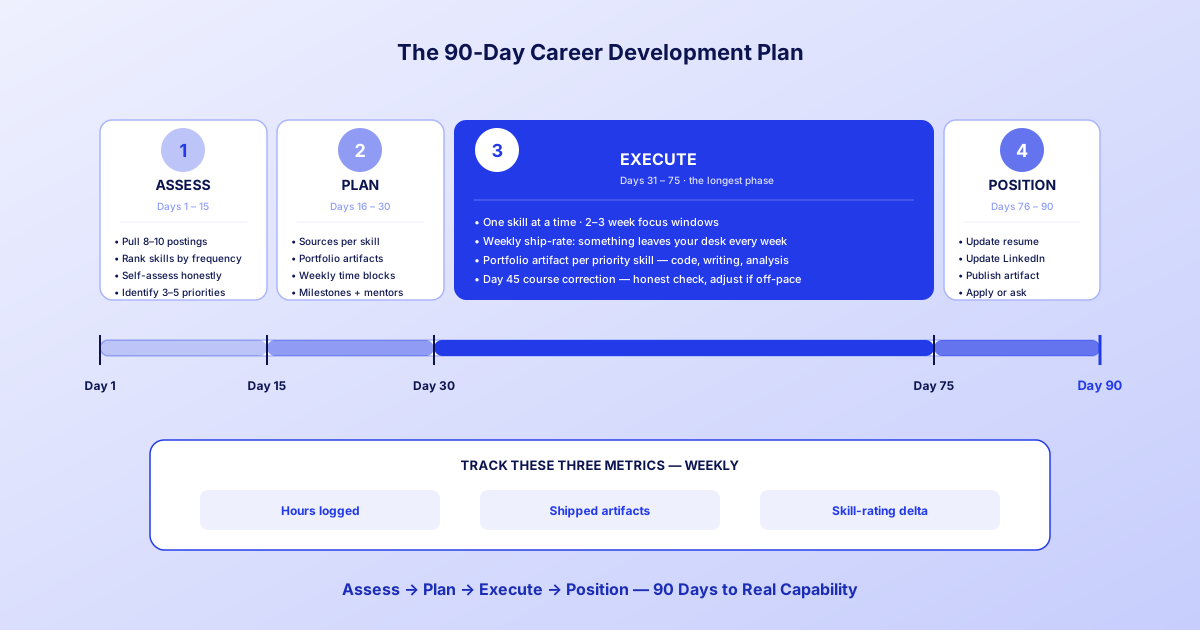
You know you want to grow. You might even know roughly in which direction. But when you sit down to make it happen, the path dissolves. Which skill to learn first? How do you know you're making progress? What do you do if it's not working at day 45?
Most career development advice is too abstract to act on ("learn AI skills") or too prescriptive to be flexible ("take this exact course"). What's missing is a framework — something structured enough to drive action but flexible enough to apply to any goal.
This post is that framework. Four phases, 90 days, specific milestones. Use it to target a promotion, pivot into a new field, or level up a specific capability.
Why 90 Days
The 90-day horizon isn't arbitrary. It's the result of three constraints working together:
Skills need time to compound. A skill you've touched for two weeks isn't usable. Real capability - the kind you can demonstrate in an interview or use in a project - takes sustained, consistent work over months, not days.
Attention needs urgency. Plans that stretch beyond three months lose emotional weight. You skip a week, then another, and the plan quietly dies. 90 days is short enough to feel the clock.
The job market moves on this cadence. Most companies make hiring and promotion decisions in quarterly cycles. A 90-day plan aligns with the organizational rhythm.
Shorter plans (30 days) don't build real skills. Longer plans (12 months) lose accountability. 90 is the Goldilocks number.
The Four Phases
Phase 1: Assess (Days 1–15)
Before you build, measure. Most career plans skip this phase and jump straight to "learn X." The result: you spend 60 days learning the wrong X.
What to do:
- Pull 8-10 job postings for your target role (one level above your current, or in your target field for career pivots).
- Extract every skill mentioned. Hard skills, methodologies, domain knowledge, soft skills.
- Rank skills by frequency. Skills mentioned in 7+ of 10 postings are table stakes. Skills in 3-5 are differentiators. Skills in 1-2 are noise.
- Self-assess on each. Use a 4-point scale: Strong (could demonstrate in an interview), Developing, Gap, or Transferable (related but not exact).
- Identify your highest-leverage gaps. Skills that are both frequent in postings AND weak on your side.
At the end of Day 15, you should have a prioritized list of 3-5 skills to focus on. Not 12. Not 20. 3-5.
Deliverable: A one-page gap analysis document.
Phase 2: Plan (Days 16–30)
With your priority skills identified, build the learning and portfolio plan.
What to do:
- For each priority skill, identify 2-3 learning sources. Courses, books, podcasts, open-source projects, mentorship. Mix formats — one primary source and one secondary source per skill.
- Plan a portfolio artifact per skill. For a skill to count in an interview, you need proof. The portfolio artifact is what you'll build or do that demonstrates the skill. A project. A writeup. A certification. A presentation.
- Schedule weekly time blocks. Carve out 8-12 hours per week for development work. Put it on your calendar. Without calendar time, nothing compounds.
- Define milestone checkpoints. Day 30 (setup done, first learning complete). Day 45 (skill 1 portfolio piece drafted). Day 60 (skill 2 portfolio piece drafted). Day 75 (portfolio integration). Day 90 (positioning + application).
- Identify mentors or accountability partners. People who've done what you're trying to do. A 30-minute conversation every two weeks with someone ahead of you accelerates your path more than any course.
At the end of Day 30, you should have a committed plan with sources, artifacts, time blocks, and checkpoints.
Deliverable: A 60-day roadmap with weekly targets.
Know exactly what to work on next
Add a job you want and Kareeo breaks down the gap between your experience and the role: the skills, keywords, and requirements to close, ranked by what matters most.
See My Gap BreakdownFree to try. No credit card required.
Phase 3: Execute (Days 31–75)
This is the longest phase — 45 days of actual skill building. It's also where most plans die.
What kills execution:
- Perfectionism. Spending 20 hours polishing one project instead of building three rougher ones.
- Analysis paralysis. Reading about a skill instead of practicing it.
- Context switching. Trying to build three skills simultaneously, making slow progress on all three.
- Silent failure. Convincing yourself you're making progress when you aren't.
What sustains execution:
- Weekly ship-rate. Every week should produce something — a piece of code, a writeup, a lesson completed, a conversation with a mentor. No shipping equals no progress.
- Skill-at-a-time focus. Work on one skill intensively for 2-3 weeks before shifting. Parallel focus slows everything down.
- Course corrections at Day 45. Midway through execution, honestly assess: am I on track? If not, what needs to change? Adjust the plan, don't abandon it.
- Public commitment. Tell someone your plan. Update them weekly. External accountability raises completion rates dramatically.
The failure pattern in this phase looks like quiet drift: you skip a week, then two. You tell yourself you'll catch up. You don't. By Day 60 you're 20 hours behind and the plan feels dead.
Catch drift early. Weekly check-ins with yourself or an accountability partner prevent it.
Deliverable: Two portfolio artifacts completed, one per priority skill.
Phase 4: Position (Days 76–90)
Skills without positioning don't translate into outcomes. The final phase turns your new capability into a visible career move.
What to do:
- Update your resume. Add the new skills to the summary, skills section, and relevant bullet points. Use the vocabulary of your target role.
- Update your LinkedIn. Headline, about section, skills, and featured section should all reflect the new capability.
- Publish a portfolio artifact publicly. Write about what you built. Post it to LinkedIn. Share it in a community you're part of. Visibility amplifies the work.
- Have three positioning conversations. Talk to people in the role you're targeting. Ask what you're missing. Adjust based on feedback.
- Apply, ask, or act on the goal. If the goal was a promotion — have the conversation with your manager. If it was a new role — start applying. If it was a pivot — start the transition. The 90 days were preparation; now you execute on the actual move.
At the end of Day 90, the skills aren't just skills. They're positioned as part of your professional identity, and you're actively acting on the career goal that motivated the plan.
Deliverable: Updated resume, LinkedIn, and active pursuit of the career move (applications, conversations, or internal requests).
Example Plans by Goal Type
The framework is generic; the content shifts based on goal.
Goal: Promotion at current company
- Assess: What skills and outcomes define the next level? What gaps do you have relative to people already at that level?
- Plan: Target 1-2 visible projects that demonstrate next-level capability. Identify stretch opportunities. Build relationships with next-level sponsors.
- Execute: Lead or contribute significantly to the identified projects. Document outcomes. Build the relationship with your sponsor.
- Position: Document your case for promotion. Have the conversation with your manager. Be specific about what you've done.
Goal: Career pivot to new field
- Assess: What skills does the target field require? Which do you have via transferable background? Which are true gaps?
- Plan: Pick 1-2 flagship projects that demonstrate target-field capability. Consider a bootcamp or certification if it's the standard in your target field.
- Execute: Build the projects. Publish them. Start building a network in the target field.
- Position: Rewrite resume and LinkedIn using target-field vocabulary. Begin applying or having conversations with hiring managers.
Goal: Leveling up a specific capability
- Assess: What's the actual skill hierarchy in the capability you're targeting? Where do you sit on it? What's the next level?
- Plan: Pick one flagship project that would require the next-level skill. Identify the specific sub-skills you need for that project.
- Execute: Build the project. Push yourself to the edge of current ability.
- Position: Share the project. Use it as a reference point in your role (if promotion-oriented) or portfolio (if role-change-oriented).
Metrics That Matter
At each checkpoint, track three specific metrics:
Hours logged. Are you actually putting in the 8-12 weekly hours? If not, the plan isn't failing — you haven't executed it.
Shipped artifacts. How many portfolio pieces, writeups, projects, or conversations happened this week? Shipping velocity is the leading indicator of progress.
Skill self-assessment delta. Every 30 days, rerate yourself on your priority skills using the same scale from Phase 1. If Developing hasn't shifted toward Strong by Day 60, something needs to change.
Numbers beat vibes. The sense that "I'm learning a lot" is unreliable. "I've logged 32 hours and shipped 2 artifacts in the last 30 days" is a measurement.
Know exactly what to work on next
Add a job you want and Kareeo breaks down the gap between your experience and the role: the skills, keywords, and requirements to close, ranked by what matters most.
See My Gap BreakdownFree to try. No credit card required.
How AI Accelerates Each Phase
AI tools compress several parts of the 90-day cycle:
Assess phase. Instead of manually extracting skills from 10 job postings, paste them into an AI assistant and ask it to rank skill frequency across the set. Hours of work becomes minutes.
Plan phase. Ask an AI assistant to recommend learning resources, portfolio artifact ideas, and sequencing given your specific priority skills. Output is usually a strong starting draft you can edit.
Execute phase. AI can serve as a practice partner (code review, writing feedback, talking through a design), a learning accelerator (explaining concepts, quizzing you), and a stuck-point unblocker.
Position phase. Resume and LinkedIn rewriting becomes dramatically faster with AI help — especially for translating old-field vocabulary into target-field vocabulary.
Used well, AI buys back the hours you would otherwise lose to research overhead. Not because you're doing less - because more of your time lands on the work that actually builds the skill.
What to Do If the Plan Isn't Working at Day 45
Halfway check: if you're behind pace by Day 45, you have three options:
Reduce scope. Drop from 3 priority skills to 2. The math works because depth beats breadth.
Extend timeline. Sometimes 90 days is too aggressive for the goal. Shift to 120 and commit honestly.
Change the goal. If the plan isn't working because the target goal doesn't motivate you, reassess the goal. Plans fail when the destination is wrong, not just when the route is wrong.
What doesn't work: pretending it's fine and hoping momentum returns. Momentum rarely returns without intervention.
Your Next Step
Pick your 90-day goal. Write it in one sentence. Put a date on Day 15, Day 30, Day 45, Day 60, Day 75, and Day 90.
Spend this week in Phase 1 — pulling job postings, extracting skills, doing the gap analysis. Don't skip to planning or learning. The gap analysis is what makes the rest of the 90 days targeted.
Tools that automate the gap analysis can compress Phase 1 from weeks to hours. That's the space Kareeo is designed for — add the job postings you're targeting and its match analysis produces a gap breakdown per job, turning a vague "I should grow" into a specific list of skills to close.
Ninety days from now, you'll either have real new capability and a concrete career move in progress — or you'll wish you'd started ninety days ago. Start now.
Know exactly what to work on next
Add a job you want and Kareeo breaks down the gap between your experience and the role: the skills, keywords, and requirements to close, ranked by what matters most.
See My Gap BreakdownFree to try. No credit card required.
Frequently Asked Questions
- Why 90 days for a career development plan?
- 90 days is long enough to build real skills and ship a portfolio piece, but short enough to maintain urgency. Longer horizons (12 months) blur accountability and lose steam. Shorter horizons (30 days) don't allow time for skills to compound. It is a planning horizon, not a guarantee: what you get out of it depends on the hours you actually put in.
- What's the difference between a career development plan and a career change plan?
- A career development plan focuses on leveling up in your current field — getting promoted, growing into a senior role, or adding a specialization. A career change plan focuses on transitioning to a different field entirely. The 90-day framework works for both; the content of each phase shifts based on your goal.
- How do I know what skills to focus on in my 90-day plan?
- Pull 8-10 job postings for the role one level above your current one. Extract every skill mentioned. Rate yourself on each. Your highest-leverage development targets are skills that appear in most postings AND where your current level is weakest. Running a posting against your resume automates the extraction step if you want to skip doing it by hand.
Related Articles
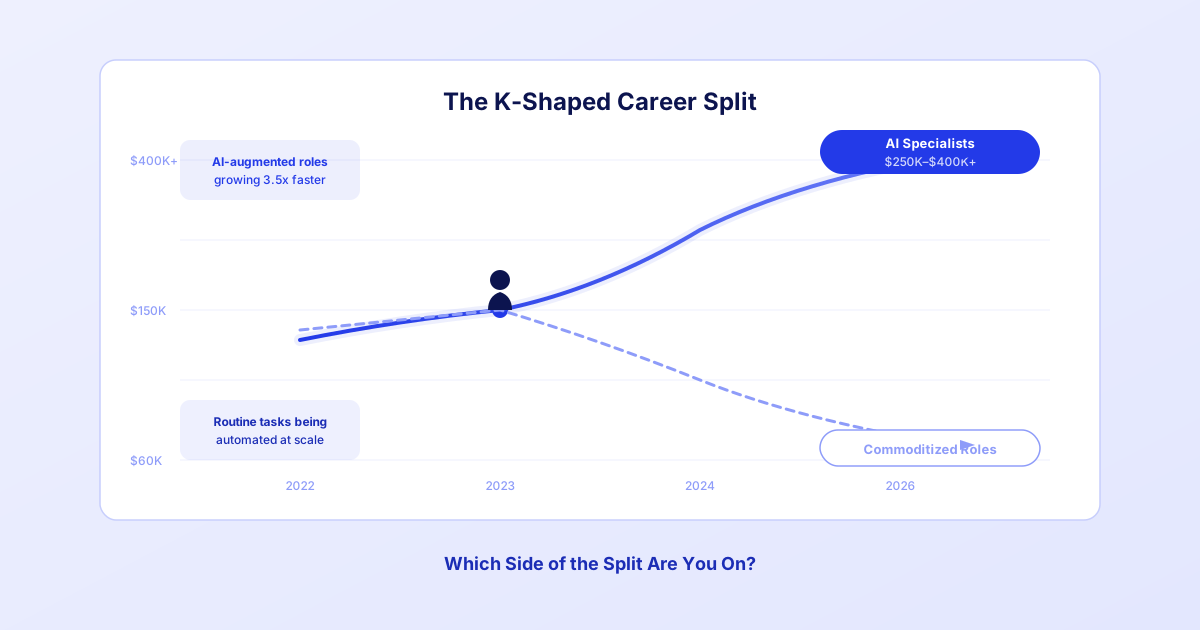
The AI Job Market Is Splitting in Two — Which Side Are You On?
The AI labor market is K-shaped: one side cannot find enough people, the other cannot get callbacks. Learn what's happening and how to position yourself.
Kareeo Team5 min read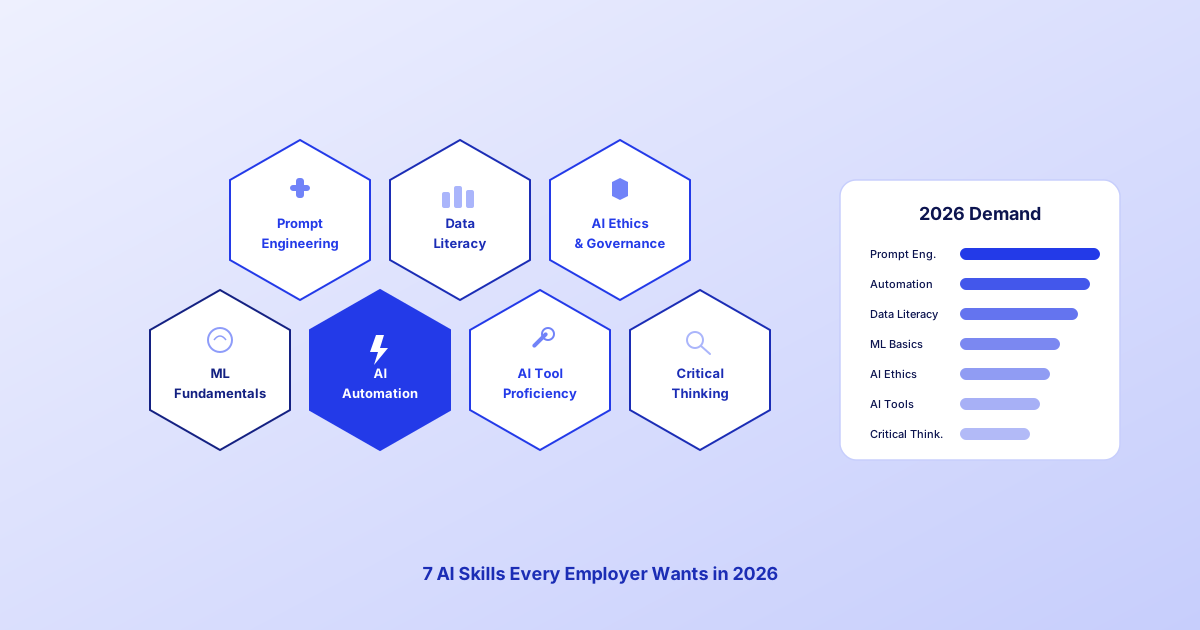
7 AI Skills Every Employer Wants in 2026
These are the 7 skills AI job postings keep asking for, and they're all learnable. Here's what each one means and how to build it.
Kareeo Team8 min read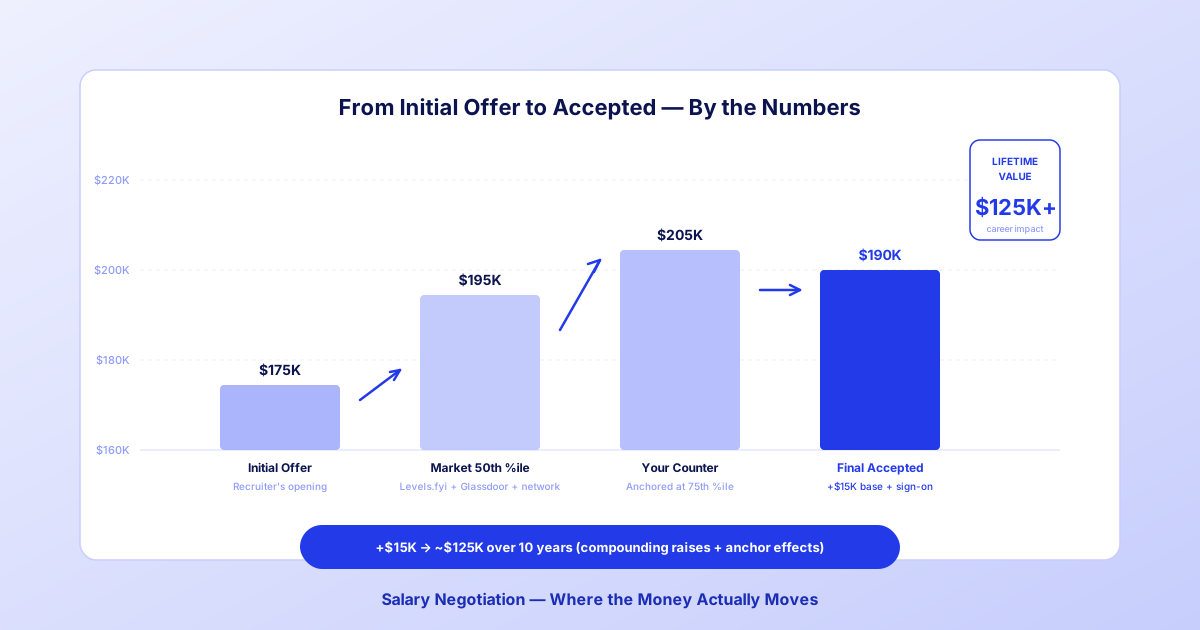
How to Negotiate Salary After a Job Offer: Scripts and Templates
What to say when the offer arrives: how to check the number against market data, word your counter, and answer pushback. Word-for-word scripts included.
Kareeo Team9 min read