How to Negotiate Salary After a Job Offer: Scripts and Templates
What to say when the offer arrives: how to check the number against market data, word your counter, and answer pushback. Word-for-word scripts included.

Kareeo Team
Career Content Team · · 9 min read
The offer arrives. You're excited. You say "thank you, I'll let you know tomorrow." You tell friends the number. You sign the next day. You start.
Six months later you find out people hired into your same level are making more than you. They all negotiated. You didn't.
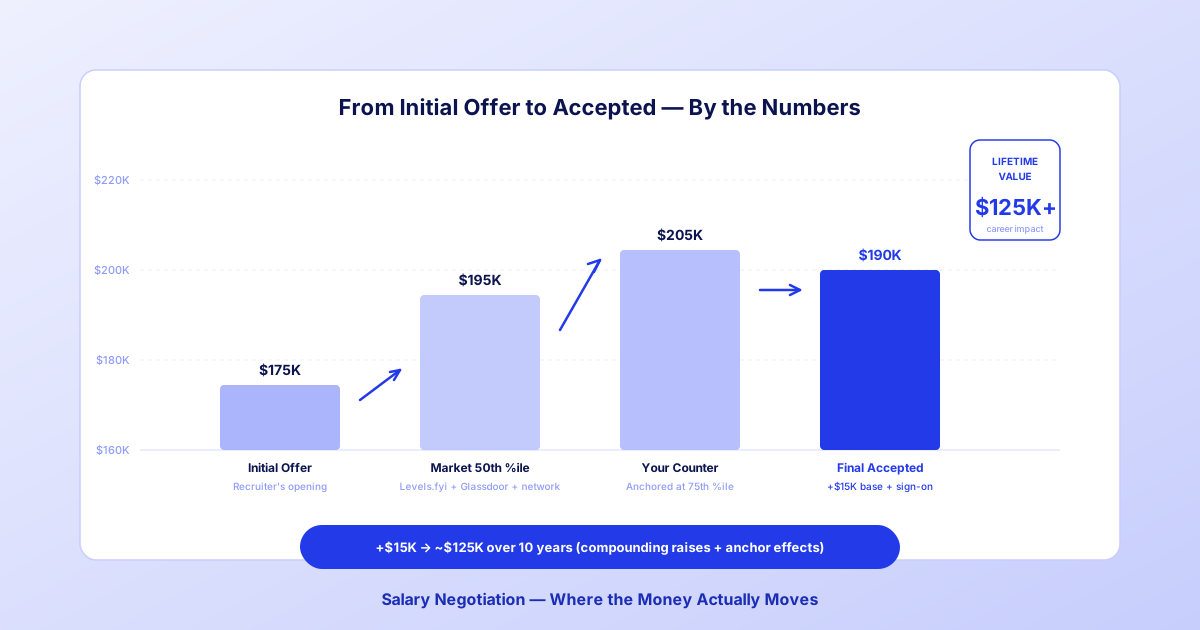
Here's the uncomfortable reality: your starting number is not just this year's number. Every raise is a percentage of it, every equity refresh is sized against it, and every future offer is anchored to it. Accepting without checking the market is a decision that follows you.
This is the playbook. Not generic negotiation advice - the specific data sources, the exact scripts, and the counter-offer structure that works in 2026.
Why Most People Don't Negotiate
Three reasons come up in every conversation with candidates who didn't:
Fear of losing the offer. In practice, rescinding over a polite counter is rare, and recruiters expect the conversation. The fear is far larger than the actual risk.
Lack of data. Without market benchmarks, candidates anchor to the offered number as "fair." It might be fair. It might be well under market. Without data, you can't tell.
Discomfort with the conversation. Asking for more feels aggressive. It isn't — recruiters expect it. Not negotiating signals either naivety or weak self-assessment.
The fix for all three is the same: a script backed by data.
Step 1: Research Before the Offer Arrives
Salary negotiation starts before the offer does. By the time you're on the phone with the recruiter, you should already know the market range.
Data sources that actually work:
- Levels.fyi — strongest for tech; shows total comp (base, equity, bonus) broken down by level and location.
- Glassdoor / LinkedIn Salary — broader industry coverage; useful for base salary but weaker on equity.
- Blind — company-specific, candid conversations about actual offers.
- H-1B disclosure data — public filings reveal base salaries by company and role.
- Your network — direct conversations with people at the company level you're interviewing for are the highest-quality source.
Cross-reference at least three sources. A single data point is noise; three aligned data points are a benchmark.
What to collect:
- 25th, 50th, 75th percentile of base salary for your level at the target company.
- 25th, 50th, 75th percentile for similar roles at peer companies.
- Typical equity ranges for the level.
- Typical sign-on bonus ranges (if applicable).
Write these numbers down before the recruiter ever asks about expectations.
Step 2: Anchor High (Without Being Absurd)
When the recruiter asks "what are your expectations?" — the wrong answer is a single number. The right answer is a range, anchored at the upper end of market data.
Script when asked for expectations:
"Based on the role scope and market data I've seen for similar positions at companies like [peer 1] and [peer 2], I'm targeting a base in the [high-end of range] range, with total comp around [stretch number]. I'm open to how the package comes together."
Three things that script does:
- Cites data. You're not naming a random number.
- References peers. You've researched comparable companies.
- Leaves flexibility. Base vs. equity vs. bonus is negotiable.
Avoid: naming your current salary, or naming a number below market. Both anchor the conversation against you.
Step 3: Get the Written Offer
Don't negotiate on a verbal offer. Politely ask for it in writing with full breakdown:
Script when offered verbally:
"That's exciting — thank you. Could you send me the full written offer including base, equity vesting schedule, sign-on, and any other components? I want to review it carefully before responding."
Written offers force the company to commit to specifics. Verbal offers can shift.
Analyze every job against your resume
Add any job and Kareeo scores your compatibility, surfaces gaps and knockout requirements, and tailors your resume — all tracked through one pipeline.
Analyze a JobFree to try. No credit card required.
Step 4: The 24-Hour Pause
Never respond to an offer the same day. Pause for at least 24 hours (preferably 48-72). This:
- Gives you time to research further.
- Signals that you're a thoughtful decision-maker, not a desperate applicant.
- Prevents emotional acceptance of a suboptimal number.
Script for the pause:
"Thank you for the offer — I'm very excited about the role. I'd like to take a day or two to review the full package carefully. Could I get back to you by [specific day]?"
Setting the specific return-by date prevents the recruiter from thinking you're stalling.
Step 5: Build the Counter-Offer
The counter-offer isn't an attack. It's a data-backed conversation.
Counter-offer structure (email or phone):
- Thank them. Express continued excitement about the role.
- State the gap. Reference market data specifically.
- Ask for specifics. Don't say "can you do better?" — name a number.
- Show flexibility. Identify which lever you're most interested in (base, equity, sign-on).
- Close with commitment. Indicate you'll accept if the gap closes.
Counter-offer template:
Hi [Recruiter],
Thank you again for the offer. I'm genuinely excited about the opportunity to join [Company] and specifically about [specific role aspect].
I've done some research on market compensation for this level, and the data I'm seeing from Levels.fyi, Glassdoor, and conversations with people in similar roles puts the 50th-75th percentile for this position in the $[X]–$[Y] range for base, with total comp around $[Z].
Would it be possible to bring the base to $[specific number] and the sign-on to $[specific number]? If we can get to those numbers, I'm ready to sign.
Thanks for considering this — happy to discuss on a call if that's easier.
[Your name]
Three specific patterns in that template:
Specific numbers, not vague asks. "Can you go higher?" gives the recruiter no target. "Can you get to $185K base?" gives them something to negotiate.
Named data sources. Citing Levels.fyi and Glassdoor signals you did homework.
"Ready to sign" commitment. This is critical. Without it, the recruiter might improve the offer and still not close you. With it, they have a clear path to yes.
Step 6: Know Your Walk-Away Number
Before you negotiate, decide the minimum number at which you'd accept. Write it down. If the final offer doesn't clear it, walk.
This is the emotional discipline piece. In the heat of the moment, you'll be tempted to accept anything that's "close enough." The pre-committed walk-away number prevents regret.
Your walk-away number should reflect:
- Market data (don't accept significantly below 25th percentile without reason).
- Your current comp (usually don't accept a decrease unless you're career-pivoting).
- Your realistic alternatives (other offers, current job, or being unemployed).
- Your risk tolerance (tighter timelines require accepting less).
Step 7: Negotiate Non-Base Levers
Base salary gets all the attention, but other levers often have more room:
| Lever | What to ask for |
|---|---|
| Base salary | The most visible lever, and usually the most constrained |
| Sign-on bonus | Often drawn from a separate budget than base |
| Equity / RSUs | Frequently has more room than base, especially at startups |
| Vesting schedule | Cliff removal, front-loading |
| Start date | Shift it to suit you |
| Remote / hybrid flexibility | Highly variable |
| Title | Rarely, but sometimes |
| Performance review timing | Bring the first review forward |
If base is capped, push on sign-on or equity. If total comp is capped, push on timing or remote flexibility. Every lever has value.
Analyze every job against your resume
Add any job and Kareeo scores your compatibility, surfaces gaps and knockout requirements, and tailors your resume — all tracked through one pipeline.
Analyze a JobFree to try. No credit card required.
What Not to Do
Don't use competing offers you don't actually have. Recruiters verify. A fake competing offer destroys trust.
Don't negotiate over text. Phone or written email. Text signals unprofessionalism.
Don't accept and then renegotiate. Once you've said yes, you've closed the negotiation window.
Don't reveal your current salary if legally allowed to decline. In most US states, salary history questions are optional. Deflect: "I'd rather focus on the market rate for the role."
Don't make it personal. "I really need this" is weaker than "market data suggests." Professional framing wins.
When You're Offered the Full Amount Immediately
Occasionally, the first offer is already at the 75th percentile of market. This happens most often when:
- The company has a strict salary band and the recruiter knows you'll counter.
- The recruiter is under pressure to close you quickly.
- You come in through a high-signal referral.
If the first offer is already strong, the negotiation isn't about base — it's about sign-on, equity, or start flexibility. Thank them for the strong offer, acknowledge it explicitly, and negotiate the smaller levers without hitting base again.
The Compound Value of One Negotiation
A bump to your base isn't a one-time gain. It changes the number everything else is calculated from.
Raises are calculated as a percentage of your base, so a higher starting number raises every subsequent one. And every future job's comp is anchored to your current, so the effect compounds beyond this role.
That makes a single twenty-minute conversation one of the highest-leverage ones in your working year.
Your Next Step
If you have an offer on the table right now: don't accept today. Pause. Pull market data from three sources. Draft a counter using the template above. Send it tomorrow.
If you're in the interview process but don't have an offer yet: research market data now, so you're not doing it under pressure later. Know your walk-away number before the offer arrives.
Negotiation isn't a special skill reserved for assertive personalities. It's a 30-minute process with a script. Most candidates skip it because they're scared, not because they've weighed the tradeoff. Weigh the tradeoff. The upside compounds across your whole career. The downside is sending a polite email.
Analyze every job against your resume
Add any job and Kareeo scores your compatibility, surfaces gaps and knockout requirements, and tailors your resume — all tracked through one pipeline.
Analyze a JobFree to try. No credit card required.
Frequently Asked Questions
- How much can I typically negotiate up from an initial offer?
- It varies by company, level, and how the budget was set, so treat any fixed number you read as a guess. What you can control is whether you ask from a market benchmark instead of a feeling. Base salary is the obvious lever; equity, sign-on bonus, and relocation are often the ones with more room.
- Will I lose the offer if I negotiate?
- It is rare. Recruiters expect a counter-offer, and a respectful, data-backed one is a normal part of closing. Rescinded offers are usually a response to a candidate being combative or unrealistic, not to negotiation itself. A company that would pull an offer over a polite counter is signaling something you'd want to know before joining.
- What's the best time to bring up salary?
- After you have a written offer in hand. Bringing up specifics before that reduces your leverage. When recruiters ask early, deflect with 'I'm focused on finding the right fit first — once we're aligned on the role, I'm confident we can align on compensation.' Give a range only when pushed, and anchor high within market data.
Related Articles
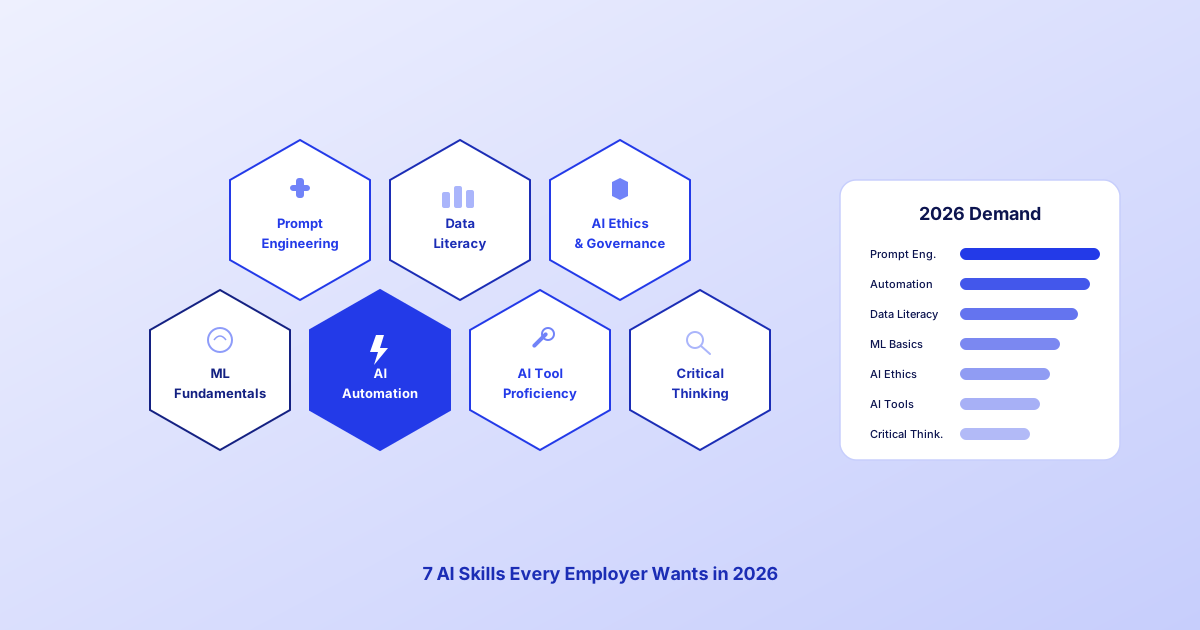
7 AI Skills Every Employer Wants in 2026
These are the 7 skills AI job postings keep asking for, and they're all learnable. Here's what each one means and how to build it.
Kareeo Team8 min read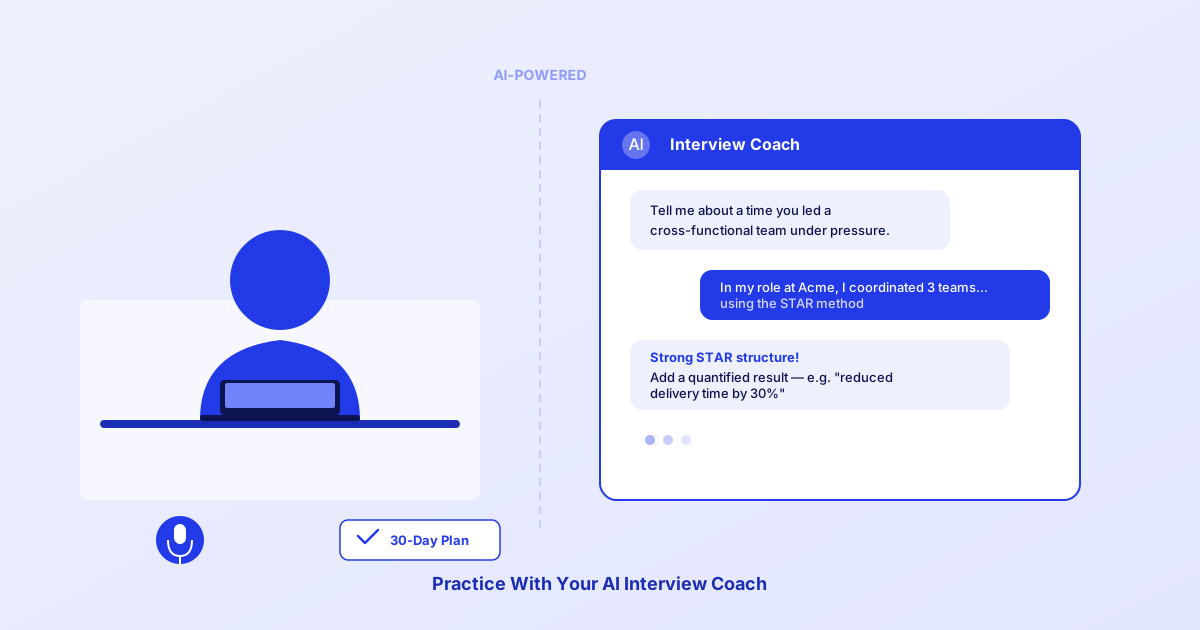
A 30-Day Interview Practice Protocol: Build Structure Under Pressure
A 30-day interview practice protocol that builds confidence, structure, and response quality. Here's the exact process, week by week.
Kareeo Team7 min read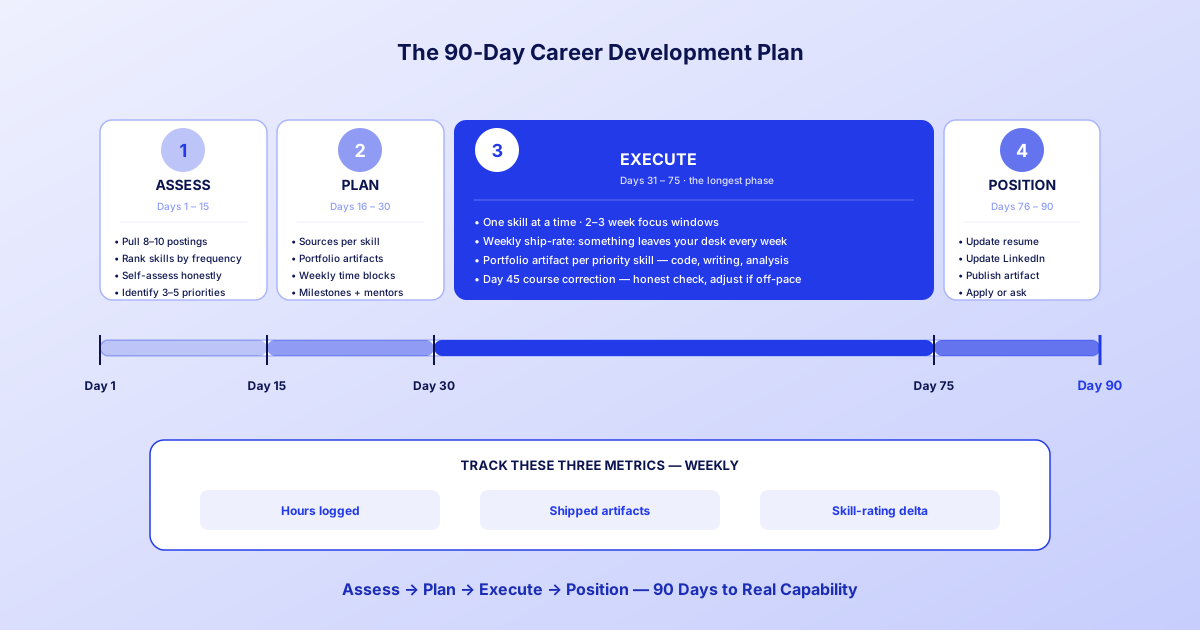
The 90-Day Career Development Plan: A Framework for Getting Promoted, Pivoting, or Leveling Up
Career growth without a plan is drift. Here's the 90-day framework that turns vague career ambition into concrete skill milestones — with templates for each phase.
Kareeo Team10 min read