How to Explain a Career Gap in 2026: Scripts for Your Resume, Cover Letter, and Interview
A career gap isn't a dealbreaker — unless you make it one. Here's exactly what to say on your resume, in your cover letter, and during the interview to reframe the gap as growth.

Kareeo Team
Career Content Team · · 8 min read
You took time off. Maybe it was six months. Maybe it was three years. Now you're applying again and every recruiter seems to stop at the date range like it's a warning label.
Here's what most advice gets wrong: the gap itself isn't what's hurting you. Your discomfort about it is. Recruiters in 2026 see career gaps constantly — pandemic-era gaps, caregiving breaks, burnout recoveries, entrepreneurship detours, extended travel. What separates candidates who get through is how they frame the gap, not whether they had one.
This post covers the exact language to use on your resume, in your cover letter, and during the interview — with scripts for the most common gap reasons.
Why Most Gap Explanations Fail
Three specific patterns kill candidates during the explanation:
Over-apologizing. "I know this looks bad, but..." — the interviewer wasn't thinking it looked bad until you said it did. Opening with apology trains them to treat the gap as a problem.
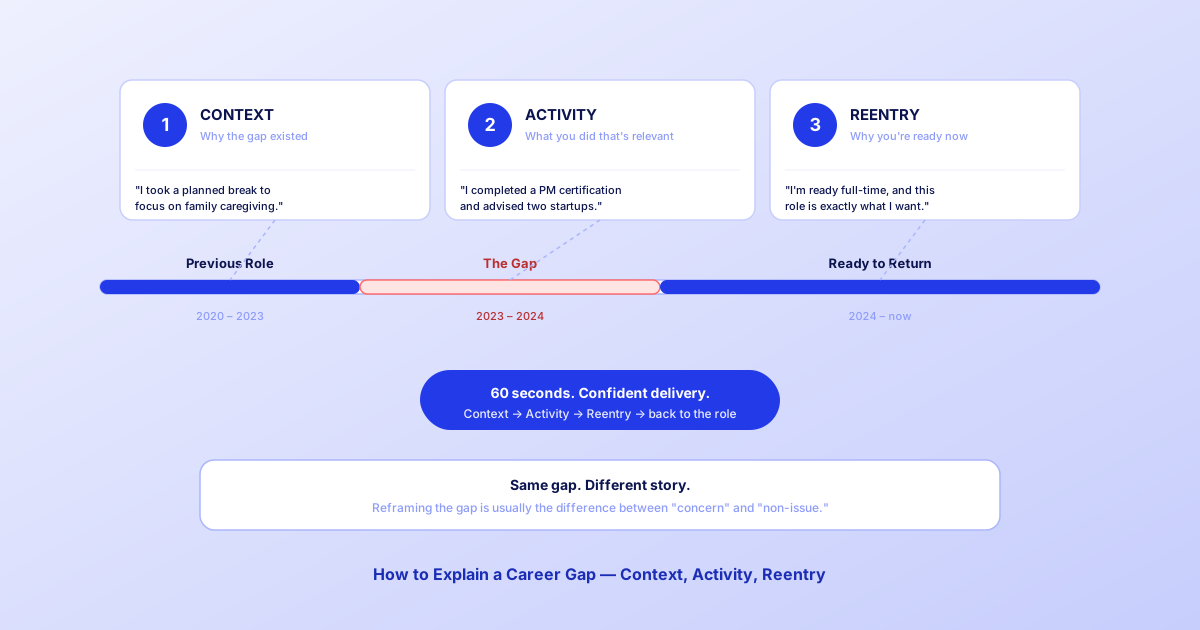
Over-explaining. A four-minute answer to "tell me about the gap" signals anxiety. The ideal answer is 45-60 seconds: context, activity, readiness. Anything more sounds like you're trying to convince yourself.
Lying or being vague. Saying "I was working on personal projects" when you weren't doesn't survive a follow-up question. Interviewers ask one or two clarifying questions; vague answers fold.
The fix for all three is the same: a clear, confident, pre-written script.
The 3-Part Gap Framing Structure
Regardless of why the gap existed, the answer follows the same structure:
- Context — the reason, stated briefly and without apology.
- Activity — what you did during the gap that's relevant (even loosely) to the role.
- Reentry — why you're ready now and why this role specifically.
Each part is 1-2 sentences. The whole answer is under a minute.
Gap Scripts by Reason
Here are scripts for the most common gap types. Adapt them to your specifics — don't recite verbatim.
Layoff or company closure
Context: "My previous company went through a restructuring in [month/year] and my role was eliminated along with most of the team."
Activity: "I used the time to [relevant activity — a certification, a contract project, depth in a new skill area]."
Reentry: "I'm now looking for a role where I can apply that background — which is why I was drawn to this position."
Caregiving (parent, child, family member)
Context: "I took [X time] away from full-time work to care for a family member who needed it."
Activity: "During that time I [relevant activity — stayed current through courses, did freelance projects, volunteered in a professional capacity]."
Reentry: "Things are settled now and I'm ready to commit to a full-time role. What draws me to this one is [specific role reason]."
Health or burnout recovery
Context: "I took a planned break to focus on my health after an intense period at [company]."
Activity: "I used the time to [rest intentionally, get certified, take a sabbatical course, reflect on what I wanted next]."
Reentry: "I'm back at full capacity and specifically looking for a role where [what you're looking for]."
You don't owe anyone the medical details. "Health" is a complete answer.
Know exactly what to work on next
Add a job you want and Kareeo breaks down the gap between your experience and the role: the skills, keywords, and requirements to close, ranked by what matters most.
See My Gap BreakdownFree to try. No credit card required.
Entrepreneurship or freelancing
Context: "I spent [X time] building [brief description of the venture] / consulting independently."
Activity: "I learned [specific skills, domain knowledge, customer insights] that I didn't have in my corporate roles."
Reentry: "I've decided I want to bring what I learned into a full-time operator role, particularly one that [reason for this role]."
This is one of the easier gaps to explain. Position it as a deliberate skill-building period, not a failure.
Travel, sabbatical, or personal
Context: "I took a planned sabbatical to [travel / focus on a personal project / something specific]."
Activity: "I used the time to [language skill / certification / creative project / deeper perspective on what I wanted next]."
Reentry: "I'm recharged and clear on what I'm looking for — which is why this role stood out."
Be specific. "Traveled" is weaker than "spent six months in Southeast Asia learning Mandarin."
Long job search / unemployment
This is the trickiest category because candidates often feel the most shame about it. Reframe the search itself as a deliberate filter.
Context: "I've been in a focused search for roles that match [specific criteria you care about]."
Activity: "During the search I've also [contract project, study, industry deep-dive, certification]."
Reentry: "This role matches what I've been looking for because [specific reason]."
Don't say "I've been looking for months and nothing is working." Say "I've been selective about the next role."
Resume Framing: What to Put on the Page
Short gaps (under 6 months) usually don't need resume-level explanation. Longer gaps are better briefly acknowledged on the resume itself — a one-line context prevents the recruiter from assuming the worst.
Three ways to handle gaps on the resume:
Option 1: Explicit gap entry. A brief line in your work history with dates and one-sentence context:
Caregiving Sabbatical — [Month Year] – [Month Year] Took planned time to support family caregiving; maintained current skills through [course / volunteer / freelance].
Option 2: Folded-in activity. If you did relevant activity during the gap, list it as its own entry:
Freelance Consultant — [Month Year] – [Month Year] Advised [2-3 clients] on [relevant topic]. Delivered [specific outcome].
Option 3: Silence (short gaps only). If the gap is under 6 months, skipping mention is fine. The one-month or two-month gap doesn't require explanation — it's just a transition.
Avoid: using years-only ranges to hide months. It flags suspicious to any experienced recruiter.
Cover Letter Framing (If You're Writing One)
Most cover letters skip gap explanations entirely — the resume is the right place. But if the gap is significant and the role is high-trust (healthcare, finance, senior leadership), a brief mention in the cover letter pre-empts questions.
Template:
You'll notice a [X-month] gap in my work history from [period]. I took that time to [brief reason], and during it I [relevant activity]. I'm excited to return to [field / role type] specifically because [role-specific reason].
Keep it to 2-3 sentences. Don't let the gap become the theme of the letter.
Interview Framing: The Delivery Matters
The content of your gap explanation matters less than the delivery. Specifically:
Pace yourself. Candidates rush through the gap explanation because they want it over with. Slow down slightly. Calm pace signals confidence.
Use past tense. "I took time off" — done, complete, in the past. Not "I've been taking time" which sounds ongoing.
Pivot forward quickly. After the reentry sentence, pivot directly to the role. "And that's why I'm especially interested in this role — the [specific aspect] is exactly what I've been looking for."
Don't volunteer more than asked. If the interviewer says "tell me about the gap," answer the 60-second version. If they want more, they'll ask.
Know exactly what to work on next
Add a job you want and Kareeo breaks down the gap between your experience and the role: the skills, keywords, and requirements to close, ranked by what matters most.
See My Gap BreakdownFree to try. No credit card required.
What to Do During the Gap to Make Later Framing Easier
If you're currently on a gap and worried about later explanation, a few small things make the reentry story dramatically easier:
Take at least one course or certification. This gives you a concrete answer to "what did you do during that time?"
Do some freelance or contract work, even unpaid. Volunteer board seats, open-source contributions, short-term consulting, nonprofit advising — any of these count as professional activity.
Attend industry events or meetups. Being current on your field's conversation is a valid activity to mention.
Keep a notes-style doc of what you learned. Months from now when you're explaining the gap, a quick reference prevents you from blanking on the specifics.
These aren't résumé-padding stunts. They're genuine activity that makes the "activity" portion of your script easy to fill in.
When the Gap Really Is the Story
Sometimes the gap isn't incidental — it's the reason you're a stronger candidate. Someone who spent two years caregiving brings perspective on prioritization. Someone who recovered from burnout brings self-awareness about sustainable work. Someone who tried entrepreneurship knows what it's like to own the outcome end-to-end.
If your gap developed a capability you genuinely use now, don't hide it. Own it. "I'm a better communicator because I spent two years caregiving" is a stronger story than pretending the gap didn't exist.
Your Next Step
Pick your gap reason from the list above. Draft your 3-part script using the template. Practice it out loud until you can deliver it in under a minute without hesitation.
Then rewrite the relevant section of your resume using one of the three framing options. Run the updated resume through a scanner against a target job posting. See if the match score holds up — most of the time, the gap itself doesn't hurt the score if the activity entry is there.
The gap is less of a problem than your discomfort about it. Fix the discomfort first, and the gap stops being a story recruiters dwell on.
Know exactly what to work on next
Add a job you want and Kareeo breaks down the gap between your experience and the role: the skills, keywords, and requirements to close, ranked by what matters most.
See My Gap BreakdownFree to try. No credit card required.
Frequently Asked Questions
- Do I need to explain a career gap on my resume?
- Short gaps (under 6 months) typically don't need explanation unless asked. Longer gaps are better addressed briefly and confidently on the resume itself — a one-line context note often prevents worse assumptions than silence. The goal is to pre-empt the recruiter's question, not apologize for the gap.
- What's the best way to explain a gap in an interview?
- Use a 3-part structure: the context (why the gap existed), the activity (what you did during it that's relevant to the role), and the reentry (what made you ready to return now). Keep it under 60 seconds. Don't over-apologize or over-explain — confidence matters more than the content.
- Does a career gap hurt my chances in 2026?
- Gaps are more accepted now than five years ago - caregiving, burnout recovery, entrepreneurship, and pandemic-era gaps are common. What hurts isn't the gap; it's framing it as lost time. Position the gap as intentional and name the relevant activity in it (freelance, volunteering, learning), and it stops being the most interesting thing about your resume.
Related Articles
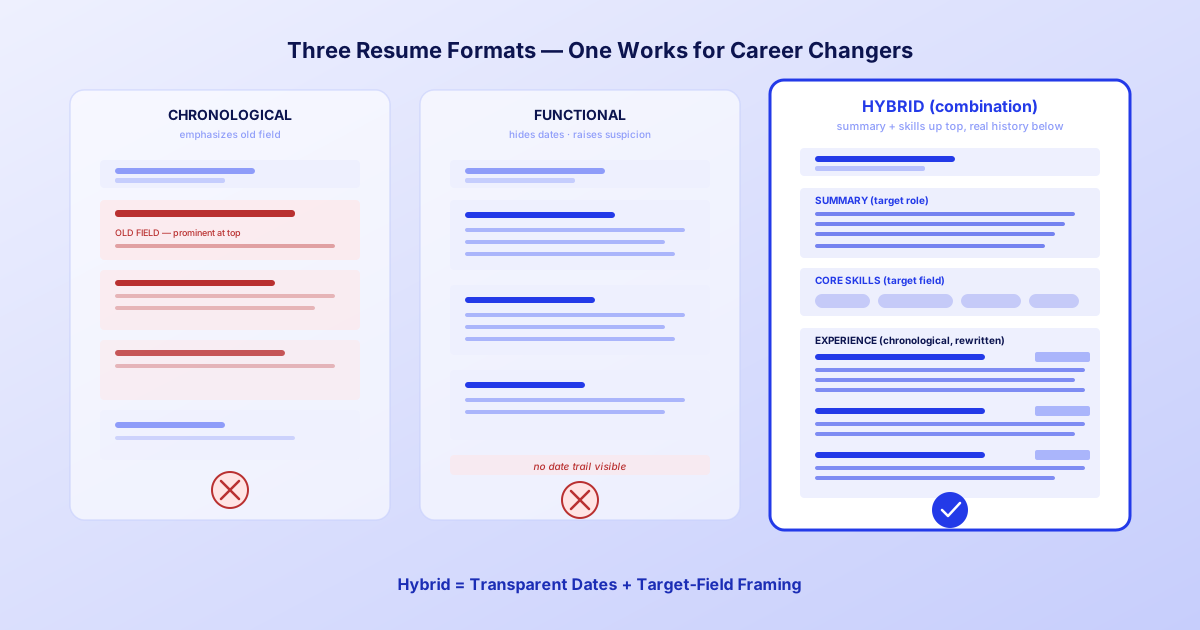
The Best Resume Format for Career Changers in 2026 (With Templates)
Functional resumes look like hiding. Chronological resumes emphasize the wrong thing. Here's the hybrid format that actually works for career changers — plus transferable-skill templates by transition type.
Kareeo Team9 min read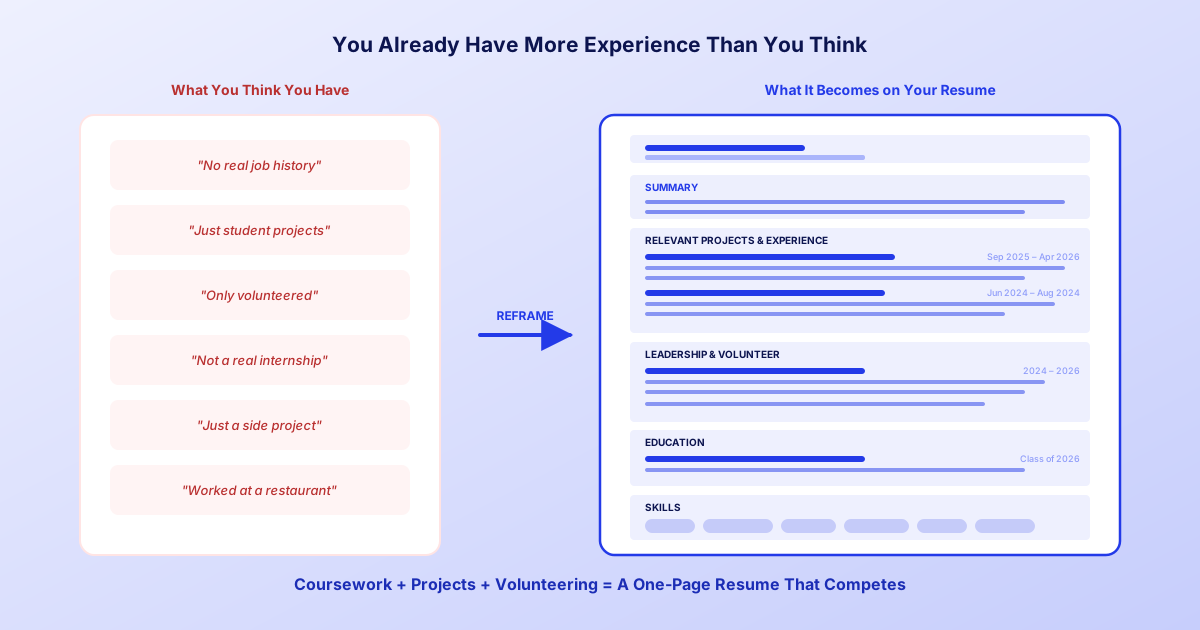
How to Write a Resume When You Have No Experience (2026 Guide)
You have more experience than you think. Here's how to build a credible, interview-getting resume from coursework, projects, volunteering, and freelance — with templates by field.
Kareeo Team9 min read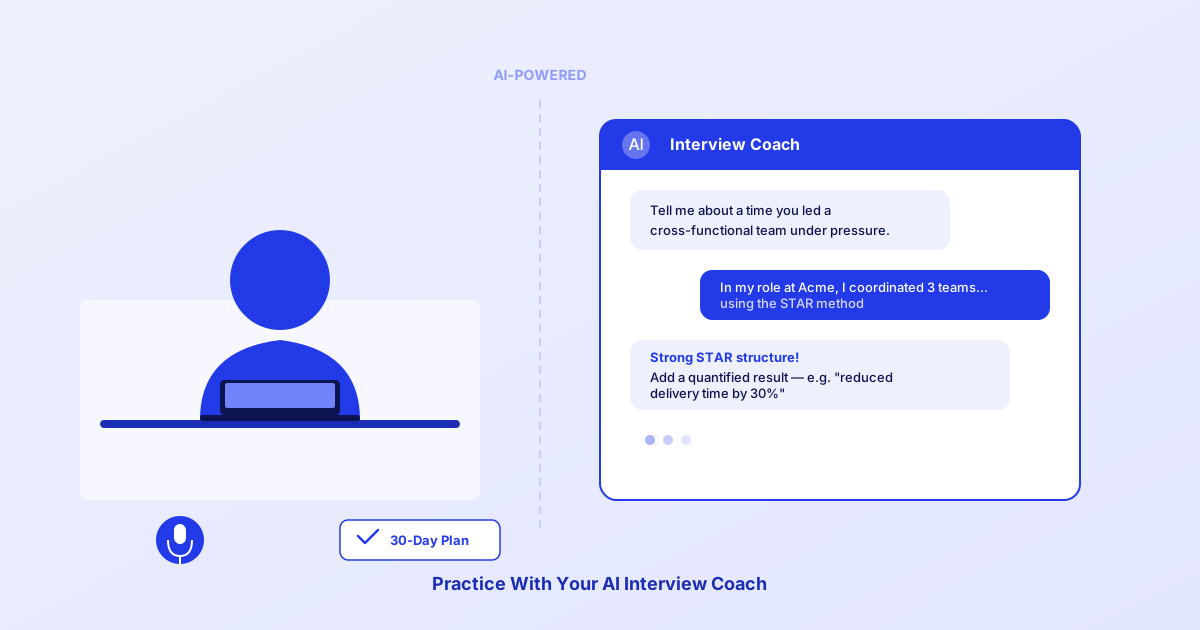
A 30-Day Interview Practice Protocol: Build Structure Under Pressure
A 30-day interview practice protocol that builds confidence, structure, and response quality. Here's the exact process, week by week.
Kareeo Team7 min read