How to Write a Resume When You Have No Experience (2026 Guide)
You have more experience than you think. Here's how to build a credible, interview-getting resume from coursework, projects, volunteering, and freelance — with templates by field.

Kareeo Team
Career Content Team · · 9 min read
You're applying for your first real job. Maybe you just graduated. Maybe you're re-entering the workforce. Maybe you're an international candidate building a new professional history from scratch. Every resume template seems to assume you've already had the jobs you're applying for.
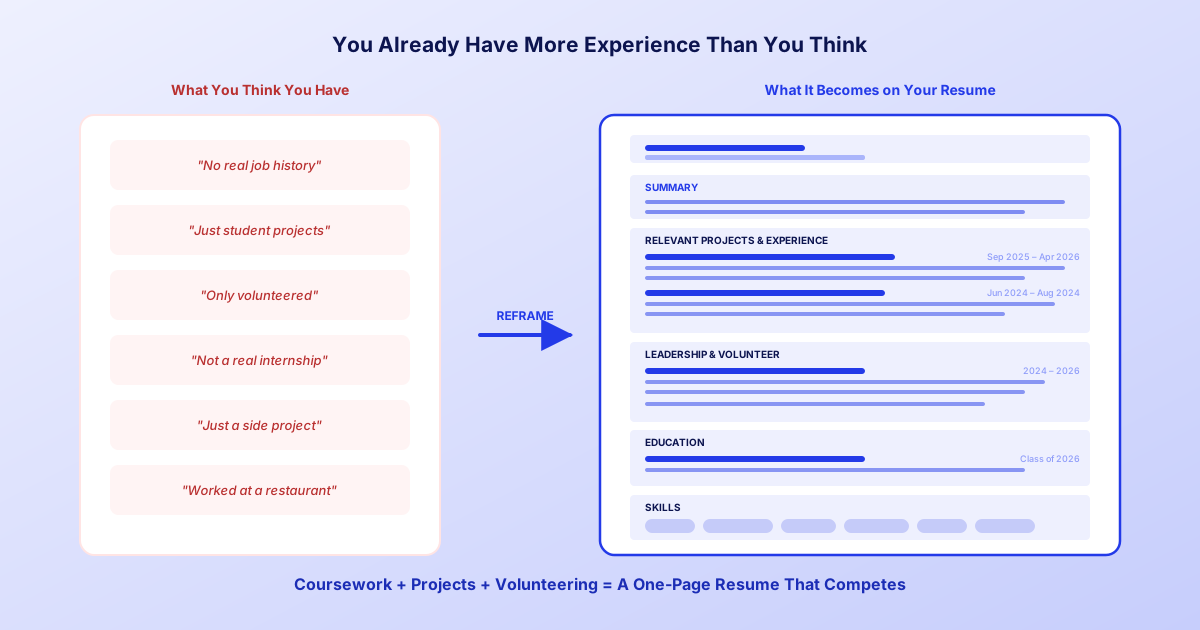
Here's the truth almost every "no experience" resume guide misses: you have more experience than you think. You just haven't framed it as experience yet.
A well-built entry-level resume mines coursework, projects, volunteering, freelance work, and even hobbies for evidence of the capabilities the target job requires. Done right, it competes with resumes from candidates who had the luxury of "real" internships.
This post shows you how.
What Actually Counts as Experience
Most first-time job seekers leave the majority of their valid experience off the resume. They've been told "work experience" means paid, full-time roles with titles and dates. By that definition, they have nothing.
By a more accurate definition — any activity where you demonstrated capability that transfers to the target job — they have plenty:
Coursework and academic projects. A capstone project involving real data, stakeholder interviews, and a final deliverable is experience. A group project where you coordinated five people to a deadline is experience.
Internships and co-ops. Even short or unpaid ones. Even ones labeled "shadowing" or "observation."
Volunteering. Managing a church food bank, coaching a youth team, running a campus club — all are experience. The organization not paying you doesn't change what you did.
Freelance or gig work. Tutoring, graphic design commissions, Etsy shop management, coding for a family friend's business. These are businesses you ran.
Extracurricular leadership. Student government, debate team, theater, cultural organizations, sports team captaincy.
Self-directed learning or projects. GitHub repos, personal blogs with traffic, a side project that shipped, an online course you built.
Research work. Research assistant positions, independent studies, even significant papers.
Personal circumstances that developed capability. Family business support, caregiving that involved logistics and coordination, significant travel that required navigation and language adaptation.
If you've done any of the above — and almost everyone has — you have experience. The work is in framing it so a hiring manager sees the relevance.
The Entry-Level Resume Structure
Use a skills-forward hybrid format. This works even better for entry-level candidates than for career changers because it puts what you do have (capabilities, projects) above what you don't (traditional job history).
1. Header
Name, email, phone, LinkedIn, location (city/state), and — for many entry-level fields — links to GitHub, portfolio site, or a relevant online presence.
2. Professional Summary (the aspiration statement)
Three lines framed as your professional identity, even if the title doesn't formally exist yet.
Template:
[Aspirational role identity] with foundational skills in [relevant skill 1], [relevant skill 2], and [relevant skill 3]. [Recent graduation or major program] with hands-on experience through [project type 1] and [project type 2]. Seeking to apply [specific capability] in [target role type].
Example (new grad aiming for data analyst):
Data analyst with foundational skills in SQL, Python, and statistical modeling. Recent Economics graduate with hands-on experience through a senior thesis on housing market analysis and freelance data projects for two local nonprofits. Seeking to apply rigorous quantitative analysis to product and growth questions at an early-stage company.
Call yourself the target role. Cite actual work you've done. Skip "seeking entry-level opportunity" language — it signals desperation.
3. Core Skills
Mix of:
- Technical skills you actually know (tools, languages, platforms).
- Methodologies from your coursework or projects.
- Soft skills that translate (often from extracurriculars).
8-12 skills, grouped if the list is long. Use the exact language from the target job postings you're applying to.
Know exactly what to work on next
Add a job you want and Kareeo breaks down the gap between your experience and the role: the skills, keywords, and requirements to close, ranked by what matters most.
See My Gap BreakdownFree to try. No credit card required.
4. Relevant Projects or Experience
This is the section that does the heavy lifting. It's where academic projects, freelance work, research, and volunteer roles become resume material.
Format for each entry:
[Project Name or Role] — [Organization / Context] — [Month Year – Month Year] One-line description of what you did.
- Outcome-oriented bullet with metric.
- Outcome-oriented bullet with metric.
- Outcome-oriented bullet with metric.
Example (senior thesis reframed):
Housing Market Impact Analysis (Senior Thesis) — [University] — Sep 2025 – Apr 2026 Analyzed 200K+ housing transactions to quantify the impact of zoning policy changes on affordability.
- Cleaned and merged 4 public datasets (Census, FHFA, local assessor records) using Python and SQL, eliminating 12% of malformed records.
- Built regression models in R to isolate zoning impact from market-wide trends; findings accepted for presentation at [conference].
- Presented findings to 3 faculty reviewers and incorporated feedback into final draft.
Same thesis most grads would list as a one-liner. Presented with specifics, it reads like professional analyst work.
5. Education
Standard format: degree, institution, graduation date. Include GPA only if 3.5+. Add honors, relevant coursework, and a thesis title if applicable.
For entry-level candidates, coursework can be its own mini-section under Education:
Relevant coursework: Data Structures, Machine Learning, Econometrics, Applied Statistics, Database Design.
This gives ATS systems more keywords to match against.
6. Leadership / Activities
Optional but high-leverage for entry-level. If you led a club, ran an event, organized something — list it here.
Format:
President, [Organization] — [University] — [Year] Led a 40-member organization; grew membership 30% YoY; organized quarterly events for 200+ attendees.
7. Technical Skills or Certifications
If you've completed any certifications (Google, AWS, Coursera specializations, HubSpot, etc.), list them. Even in-progress certifications count as long as you note the status.
8. Optional: Portfolio / Links
GitHub, personal site, published writing, design portfolio, research papers. If relevant to the target role, feature them prominently.
Reframing Common Entry-Level Experience
Here's how to translate everyday entry-level activity into resume-ready language.
Retail / Food Service
Weak: "Worked as a cashier at a local restaurant."
Strong: "Customer service representative handling 100+ transactions per shift; trained 4 new hires on POS systems and food-safety protocols; consistently exceeded upsell targets by 15%."
Babysitting / Tutoring
Weak: "Babysat for families in my neighborhood."
Strong: "Provided in-home childcare for 5 families on a recurring basis, coordinating schedules, managing dietary restrictions, and delivering enrichment activities; earned repeat bookings and 3 direct-reference hires."
Volunteer Work
Weak: "Volunteered at the food bank."
Strong: "Operations volunteer at [Food Bank], coordinating weekly distributions for 200+ families; managed inventory intake, trained 6 new volunteers, and maintained distribution records for board reporting."
Greek Life / Clubs
Weak: "Member of [fraternity/sorority]."
Strong: "Philanthropy Chair, [Organization] — led fundraising for [cause], coordinating 8 volunteer events; raised $12K against a $7K target."
Gaming / Creator Economy
Weak: "Streamer on Twitch."
Strong: "Independent content creator building a Twitch channel to 4K followers; managed content scheduling, audience engagement, sponsor partnerships, and analytics reporting across a 2-year period."
Yes — gaming communities, creator economy work, and online community management absolutely count. Especially for digital-native roles.
The Metrics Trap
Entry-level candidates often think they can't quantify their experience. "I wasn't measuring outcomes on my college project." "Volunteer work doesn't have KPIs."
Two ways to find metrics:
Count things. Number of people affected, number of events organized, number of clients served, number of hours, number of donations processed, number of followers built, number of posts shipped. Almost any activity has a countable dimension.
Estimate credibly. If you ran an event for roughly 80 people, say 80. If you can't count directly, bracket ("40-50 weekly attendees"). Don't inflate.
Unquantified bullets are okay. Bullets with numbers are stronger. Lead with the strongest ones.
Common Entry-Level Mistakes
Listing too many hobbies. "Avid reader, enjoys hiking, coffee enthusiast" is filler. Drop it.
Using objective statements instead of summaries. "Seeking an entry-level position where I can grow" is obsolete. Use the professional summary template above.
Overloading the skills section. Listing every software you've ever opened doesn't impress. List the ones you can actually demonstrate.
Ignoring the ATS. Entry-level resumes often fail because applicants don't use the target field's vocabulary. Run your resume through a scanner against a target role.
Hiding education date when it's recent. Don't. Recent graduates are in demand for entry-level roles; the graduation date is context, not a liability.
Making it longer than one page. Entry-level resumes are one page. Always. Cut ruthlessly.
Know exactly what to work on next
Add a job you want and Kareeo breaks down the gap between your experience and the role: the skills, keywords, and requirements to close, ranked by what matters most.
See My Gap BreakdownFree to try. No credit card required.
The "But I Really Have Nothing" Case
Occasionally a candidate genuinely has thin experience — maybe you've been a full-time student with no extracurriculars, no projects, no part-time work, no freelance. Rare, but it happens.
In that case, front-load on two things:
Build one portfolio piece. A 2-4 week self-directed project that demonstrates capability. Code, writing, analysis, design — whatever the target role is. This single project can anchor the whole resume.
Volunteer for something small. Even 10 hours at a nonprofit, a campus club, or a short-term project gives you an entry to frame.
A month of focused activity can shift a resume from "nothing" to "a few compelling data points."
Your Next Step
Pull up whatever resume you have now (or a blank page if you don't). Walk through the list of "what actually counts as experience" at the top of this post. Note every item that applies to you.
You'll almost certainly find 4-6 legitimate entries. Not all of them were labeled as jobs. All of them can be framed to show capability.
Rewrite each using the format in this post — project name, context, dates, outcome-oriented bullets with metrics where possible. Put the summary statement at the top.
Then run the finished resume through an ATS scanner against a target entry-level role. Score in the 70s means you're ready to apply. Score in the 50s means you're missing target-field vocabulary; iterate on the skills section.
Once you start applying, keep this version as your base resume and adjust it for each posting. The resume tailoring workflow shows what to change per job and what to leave alone. If you are switching fields rather than starting out, the resume format for career changers covers the layout that works better for that case.
You're not starting from nothing. You're starting from everything you've already done — translated into the language of the work you want.
Know exactly what to work on next
Add a job you want and Kareeo breaks down the gap between your experience and the role: the skills, keywords, and requirements to close, ranked by what matters most.
See My Gap BreakdownFree to try. No credit card required.
Frequently Asked Questions
- What should I put on my resume if I have no work experience?
- Focus on coursework relevant to the target role, projects (academic or self-directed), volunteering, freelance or gig work, relevant extracurriculars, and transferable skills from non-traditional settings. Frame each with outcomes and metrics where possible. You likely have 4-6 legitimate entries — you just haven't called them 'experience' before.
- Is a skills-based resume good for entry-level candidates?
- A skills-forward hybrid format works well for entry-level. Lead with a summary and a relevant skills section, then list whatever experience you have (projects, internships, volunteering) chronologically. Avoid pure functional resumes — recruiters treat them with suspicion. The hybrid format shows you have capability AND dates.
- How long should an entry-level resume be?
- One page. Always. Even if you feel you don't have enough content to fill one page, use white space, strong section headers, and focused bullets rather than stretching. A tight one-page resume beats a padded one-and-a-half-page resume for entry-level roles.
Related Articles
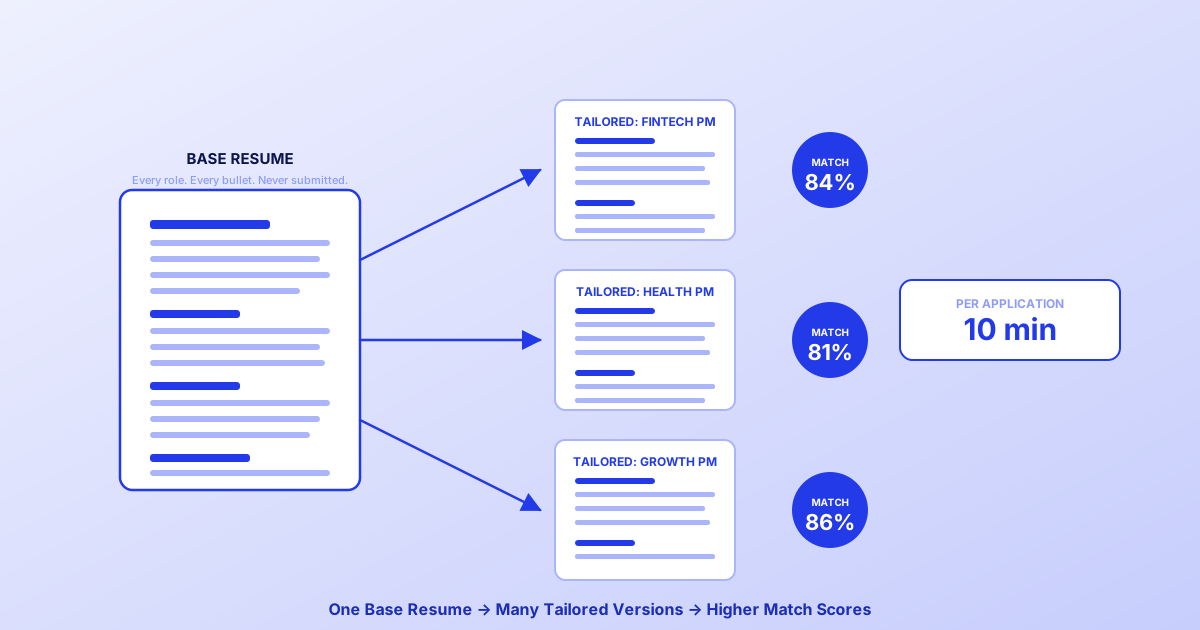
Resume Tailoring in 2026: How to Customize Your Resume for Every Job in Under 10 Minutes
The 10-minute workflow for tailoring a resume to each job from a base resume, with a before-and-after example of what changes and how to explain it.
Kareeo Team10 min read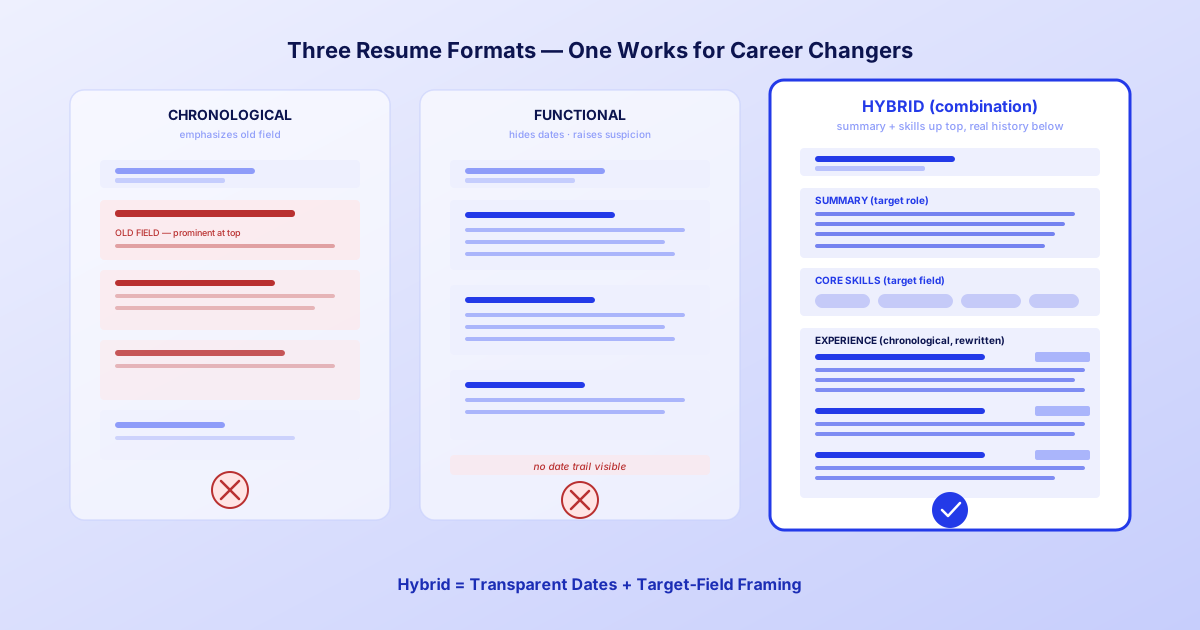
The Best Resume Format for Career Changers in 2026 (With Templates)
Functional resumes look like hiding. Chronological resumes emphasize the wrong thing. Here's the hybrid format that actually works for career changers — plus transferable-skill templates by transition type.
Kareeo Team9 min read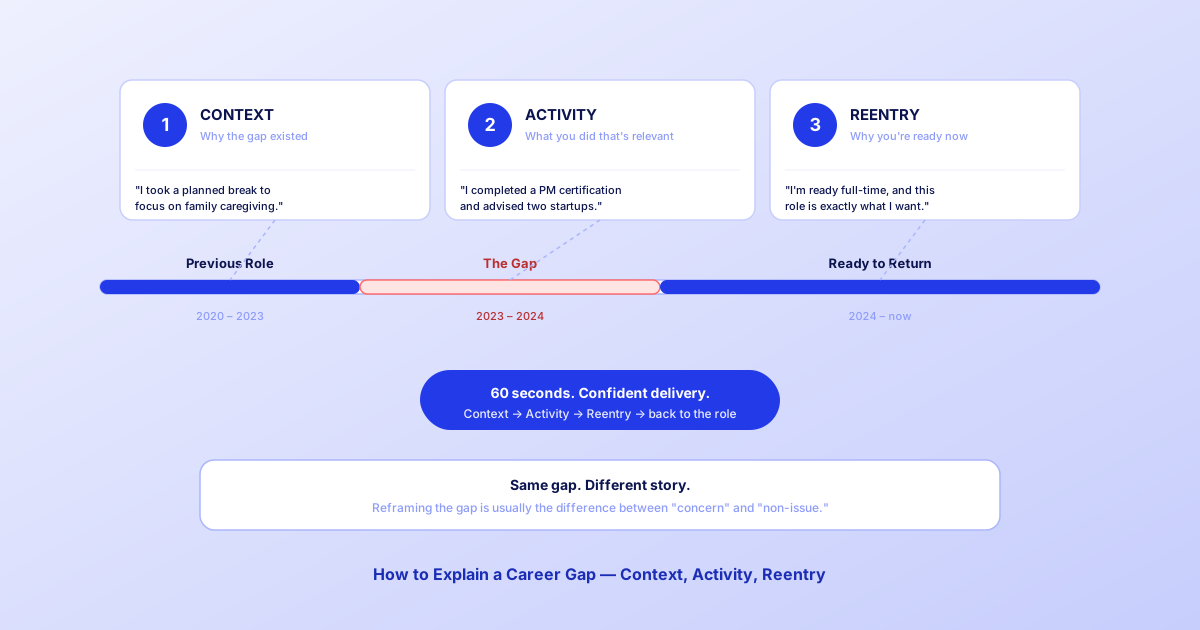
How to Explain a Career Gap in 2026: Scripts for Your Resume, Cover Letter, and Interview
A career gap isn't a dealbreaker — unless you make it one. Here's exactly what to say on your resume, in your cover letter, and during the interview to reframe the gap as growth.
Kareeo Team8 min read