The Best Resume Format for Career Changers in 2026 (With Templates)
Functional resumes look like hiding. Chronological resumes emphasize the wrong thing. Here's the hybrid format that actually works for career changers — plus transferable-skill templates by transition type.

Kareeo Team
Career Content Team · · 9 min read
You've decided you're pivoting. Maybe teaching to UX. Military to corporate. Finance to product management. The skills transfer. You know they do. But every time you look at your resume, it screams the old career — and recruiters skip past it.
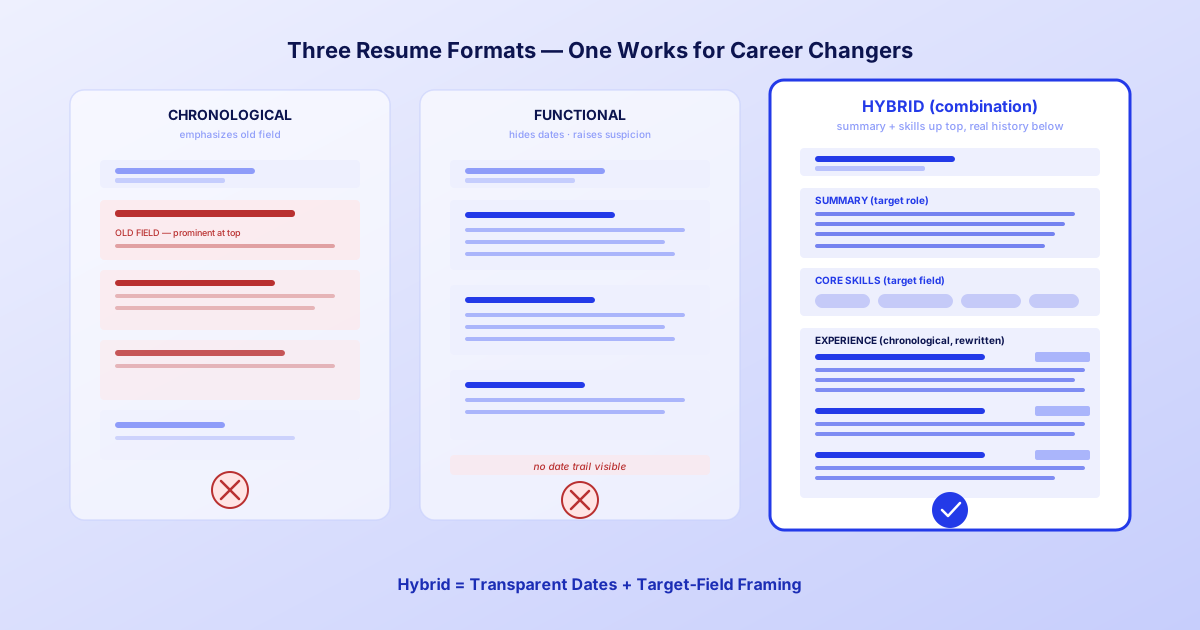
Here's what career-change advice gets wrong. Most of it tells you to use a "functional resume" that hides dates and emphasizes skills. It's well-meaning, but recruiters have caught on. A functional resume in 2026 signals one thing: "this person is hiding something." Your pivot doesn't need hiding. It needs translating.
This post covers the resume format that actually works for career changers, with transferable-skill templates by common transition type.
Why Functional Resumes Fail
The functional resume was popular in the 2000s. The idea: group your experience by skill instead of by job, burying the dates. The theory was that if the dates look suspicious, you're better off de-emphasizing them.
The modern reality:
- Most ATS systems parse dates regardless of format — they'll still show the gap.
- Recruiters know the functional resume format and have learned to treat it with suspicion.
- Hiring managers want to see the progression of your work. Without it, they fill in blanks (usually negatively).
Functional resumes fail the sniff test. Don't use them.
The Format That Works: Hybrid (Combination)
The hybrid format takes the best of functional and chronological:
Top third: Professional summary + transferable skills section, emphasizing the target field.
Middle third: Chronological work history with rewritten bullets that translate past work to target-field language.
Bottom third: Education, certifications, and (if applicable) a projects section showcasing target-field work.
This format is transparent (dates are visible), targeted (top emphasizes transferable skills), and honest (your actual jobs are listed). Recruiters trust it; ATS parses it cleanly; hiring managers can see the pivot without feeling deceived.
Anatomy of a Career-Change Hybrid Resume
Here's the structure, section by section:
1. Header (standard)
Name, phone, email, LinkedIn, location (city/state). No photo, no graphic header, no logo.
2. Professional Summary (the pivot statement)
This is where the career change is named explicitly, framed as a deliberate choice.
Template:
[Your target role identity] with [X] years of experience in [adjacent field] specializing in [transferable skill 1], [transferable skill 2], and [transferable skill 3]. Transitioning into [target field] to apply [specific relevant experience] to [target problem area].
Example (teacher → UX researcher):
User researcher with 8 years of experience in education specializing in observational research, curriculum design, and group facilitation. Transitioning into product UX to apply deep experience in understanding learners to understanding product users.
Three rules:
- Call yourself the target role, not your current one.
- Name the transferable skills using target-field vocabulary.
- Explain the transition as deliberate, not accidental.
3. Core Skills (ATS candy + target-field signal)
8-12 skills, all framed in target-field language. Include a mix of:
- Hard skills from the target field you've genuinely used.
- Methodologies that transfer (e.g., "user research" from teaching).
- Tools (even basic ones — listing Figma, Notion, etc. if you use them).
This section is where ATS keyword matching does its work. Don't skip it.
See what the software sees in your resume
Upload your resume for a free diagnosis. It is parsed the way an ATS parses it, read the way a recruiter reads it, and you get the fixes ranked by what moves your score.
Get my free diagnosisFree to try. No credit card required.
4. Relevant Experience (target-field projects if you have them)
If you've done any target-field work — freelance, volunteer, side project, certification capstone — list it as its own section ABOVE your main work history.
Example entry:
UX Research Intern (Freelance) — [Month Year] – Present Conducted 12 user interviews for an EdTech startup; synthesized findings into a product recommendation that shifted onboarding UX.
This section pulls recruiter attention immediately. Even a short freelance engagement beats "I'm making the switch and looking for my first role."
5. Professional Experience (chronological, rewritten)
Your actual work history, most recent first. Here's where career changers leave the most on the table: they list old-field bullets in old-field language.
Example, before (teacher bullets):
- Created weekly lesson plans for classes of 28 students.
- Observed students and adjusted teaching approach based on needs.
- Led parent-teacher conferences twice per semester.
Example, after (rewritten for UX research target):
- Designed and iterated instructional systems for 28 users, A/B testing content delivery approaches across 180 teaching sessions.
- Conducted daily observational research on learner behavior; synthesized findings weekly to refine pedagogical approach.
- Facilitated 60+ stakeholder-alignment sessions with parents, distilling qualitative feedback into actionable plan updates.
Same facts. Same jobs. Different vocabulary. The teaching is still there — but framed so a UX hiring manager sees the relevant capabilities.
6. Education & Certifications
Standard. If you've completed target-field certifications (Google UX, Nielsen Norman, etc.), feature them prominently. If you're mid-certification, list "In progress: [cert name], expected [month year]."
7. Optional: Portfolio / Projects Section
If you've built target-field portfolio pieces (case studies, side projects, open-source contributions), add a section. Link directly to the artifacts.
The 3 Resume Formats Compared
| Format | Best for | Career changer verdict |
|---|---|---|
| Chronological | Linear career growth | Don't use — emphasizes old field |
| Functional | Obscuring date gaps | Avoid — flagged as suspicious |
| Hybrid (combination) | Career changers, transitions | Use this |
The hybrid format is purpose-built for people whose most important context isn't "what I did last" — it's "how what I've done applies to what I want to do next."
Transferable Skill Mapping by Transition Type
Specific transitions have well-trodden transferable-skill maps. Here are a few common ones:
Teacher → UX Researcher / Instructional Designer
- Lesson planning → instructional design / curriculum design
- Classroom observation → observational research / ethnographic research
- Parent-teacher conferences → stakeholder facilitation / user interviews
- Student assessment → user testing / usability evaluation
- Differentiated instruction → personalization strategy
Military → Corporate / Operations
- Mission planning → strategic planning / program management
- Team leadership → people management / cross-functional leadership
- Logistics coordination → supply chain / operations
- Risk assessment → risk management / compliance
- Training delivery → L&D / enablement
Finance / Accounting → Product Management
- Financial modeling → analytical rigor / quantitative decision-making
- Variance analysis → performance analysis / experiment evaluation
- Budget ownership → resource allocation / prioritization
- Stakeholder reporting → executive communication
- Audit / compliance → risk framing / trade-off analysis
Journalism → Content / Marketing
- Interviewing → user research / customer development
- Feature writing → content strategy / long-form marketing
- Editing → content operations / editorial oversight
- Source development → community building / relationship management
- Deadline production → campaign management / sprint delivery
Clinical Nursing → Health Tech / Operations
- Patient assessment → needs analysis / user research
- Clinical documentation → process documentation / SOP design
- Multidisciplinary coordination → cross-functional collaboration
- Crisis management → incident response / on-call protocols
- Patient education → user onboarding / health literacy content
These mappings aren't inventions. They're accurate translations of the work you've already done.
The Summary Statement Test
The fastest way to check if your career-change resume is working:
Read only the top third (header + summary + core skills). Can a recruiter tell within 10 seconds what role you're applying for?
If yes, you're in good shape. If no — if the top third still sounds like your old career — rewrite it. The top third does 80% of the work.
See what the software sees in your resume
Upload your resume for a free diagnosis. It is parsed the way an ATS parses it, read the way a recruiter reads it, and you get the fixes ranked by what moves your score.
Get my free diagnosisFree to try. No credit card required.
Handling the "Why the Change?" Question
Every career-change resume triggers the question "why?" You don't answer it on the resume — you answer it in interviews. But the resume should pre-empt the worst versions of the question.
Weak pre-empting: "Seeking a career change."
Strong pre-empting: "Transitioning into [target field] to apply [specific relevant experience] to [target problem area]."
Specificity signals intent. Vagueness signals escape.
Common Mistakes to Avoid
Don't drop old experience. Your full work history matters. Rewrite bullets; don't delete roles.
Don't over-rotate. If you've been a teacher for 10 years and a UX bootcamp grad for 3 months, lead with UX — but don't pretend the teaching didn't happen.
Don't exaggerate skills. Listing "user research expert" after one class tanks you in the interview. List skills at the level you can actually demonstrate.
Don't forget the ATS. Career-change resumes often miss target-field keywords because you're in the habit of using old-field vocabulary. Run the resume through an ATS scanner against a target role before submitting.
Don't skip the summary. It's the single most important section for career changers.
Your Next Step
Pull up your current resume. Look at the top third. If a recruiter can't tell within 10 seconds what role you're applying for, rewrite the summary first using the template above.
Then pick one role in your work history and rewrite the bullets using target-field vocabulary. Just one role. See how it changes the feel of the resume.
Run the updated resume through an ATS scanner against a target job posting. If the match score is in the 70s or higher, you're positioned well. If it's in the 40s-50s, the vocabulary shift hasn't gone far enough. Iterate.
Once the format is set, tailor it for each posting rather than sending one version everywhere. The resume tailoring workflow shows which sections to change per job. If you have little formal experience in the new field, how to write a resume with no experience shows how to count projects, coursework and volunteering.
Career changers aren't starting over. They're re-translating what they already know. The right format does most of the translation work for you.
See what the software sees in your resume
Upload your resume for a free diagnosis. It is parsed the way an ATS parses it, read the way a recruiter reads it, and you get the fixes ranked by what moves your score.
Get my free diagnosisFree to try. No credit card required.
Frequently Asked Questions
- What's the best resume format for a career changer?
- A hybrid format (also called combination) is the best fit for most career changers. It opens with a summary and skills section that emphasizes transferable capabilities for your target field, then lists your work history chronologically so recruiters don't feel like something's being hidden. Pure functional resumes are a red flag to most ATS systems and recruiters.
- Should I include my non-related jobs on a career-change resume?
- Yes, but reframe the bullets. A teacher applying for UX research should keep the teaching role but rewrite bullets around curriculum design (instructional design), student observation (user research), and group facilitation (moderating sessions). Same facts, target-role framing.
- Do ATS systems handle career-change resumes well?
- ATS systems don't explicitly detect career changes, but they do penalize resumes where required keywords are missing — which is common when bullets still use your old industry's vocabulary. The fix is to rewrite bullets using the target field's terminology while keeping the underlying facts accurate.
Related Articles
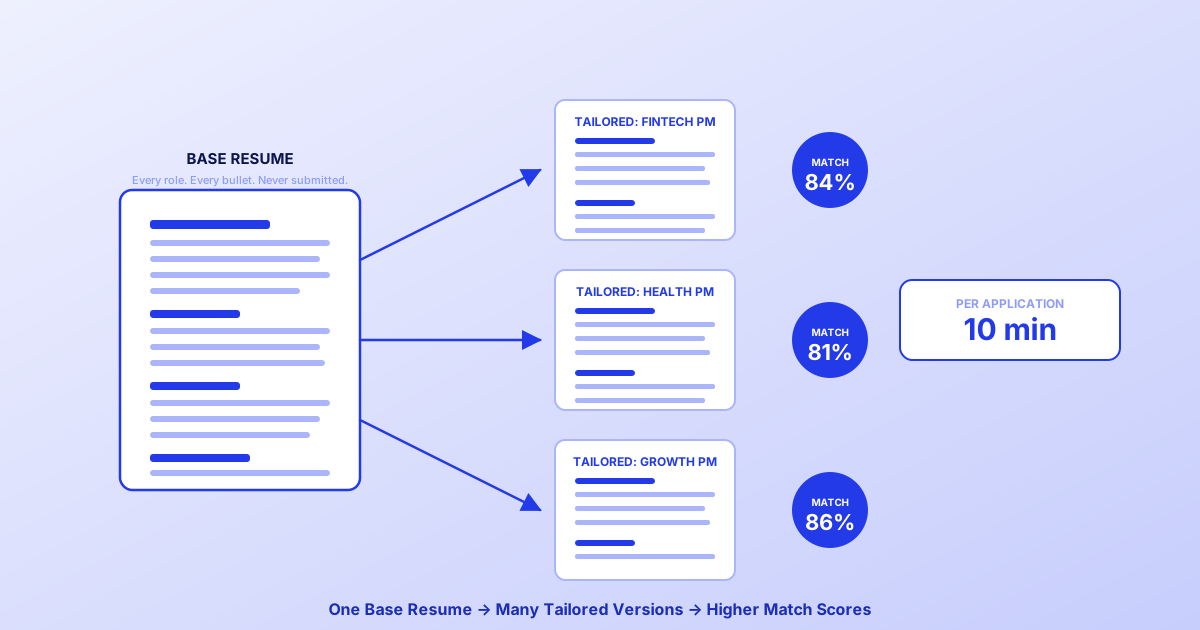
Resume Tailoring in 2026: How to Customize Your Resume for Every Job in Under 10 Minutes
The 10-minute workflow for tailoring a resume to each job from a base resume, with a before-and-after example of what changes and how to explain it.
Kareeo Team10 min read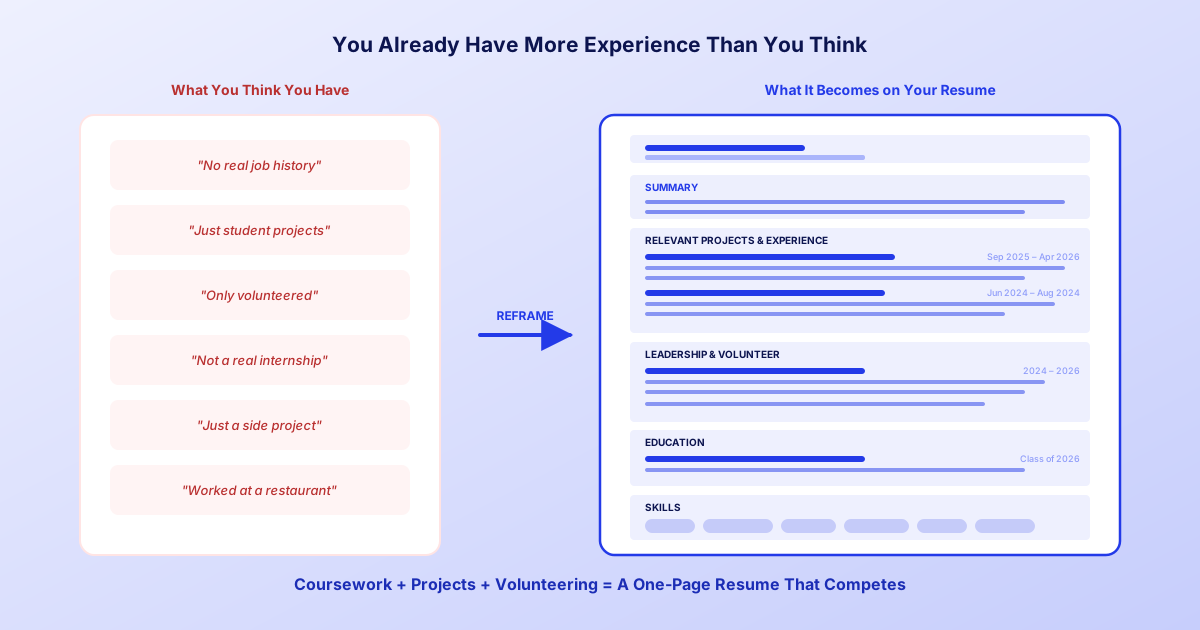
How to Write a Resume When You Have No Experience (2026 Guide)
You have more experience than you think. Here's how to build a credible, interview-getting resume from coursework, projects, volunteering, and freelance — with templates by field.
Kareeo Team9 min read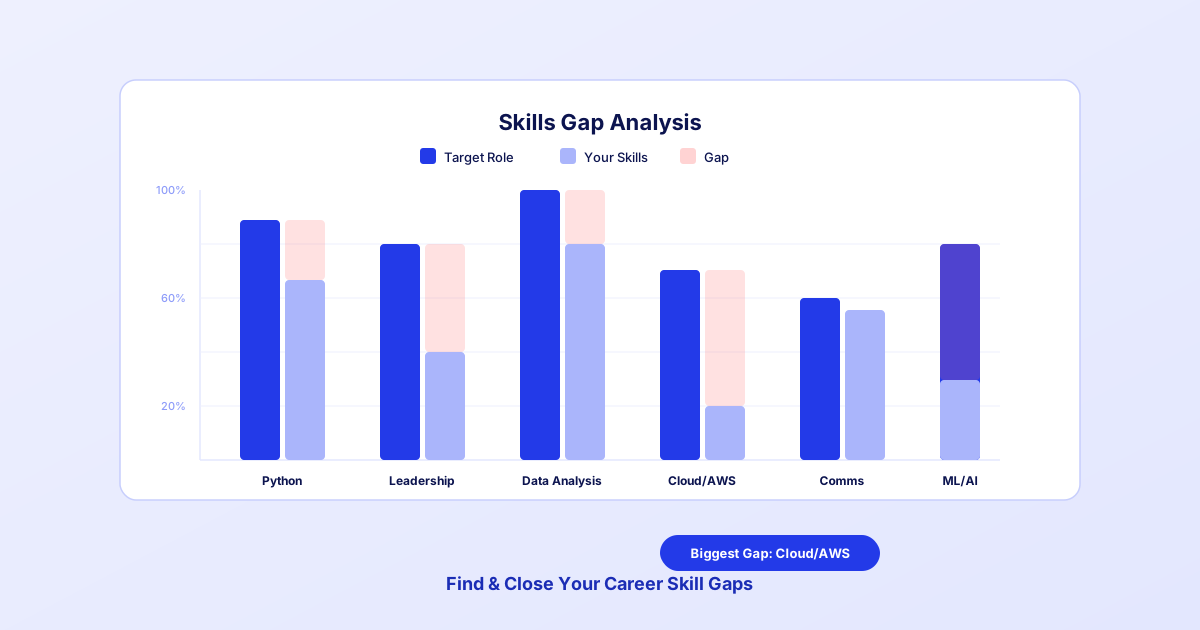
Skill Gap Analysis: How to Find What Your Target Role Needs
A five-step skill gap analysis: define the target role, list what it requires, check what you can prove, and pick the skill gaps worth closing first.
Kareeo Team6 min read