Resume Tailoring in 2026: How to Customize Your Resume for Every Job in Under 10 Minutes
The 10-minute workflow for tailoring a resume to each job from a base resume, with a before-and-after example of what changes and how to explain it.

Kareeo Team
Career Content Team · · 10 min read
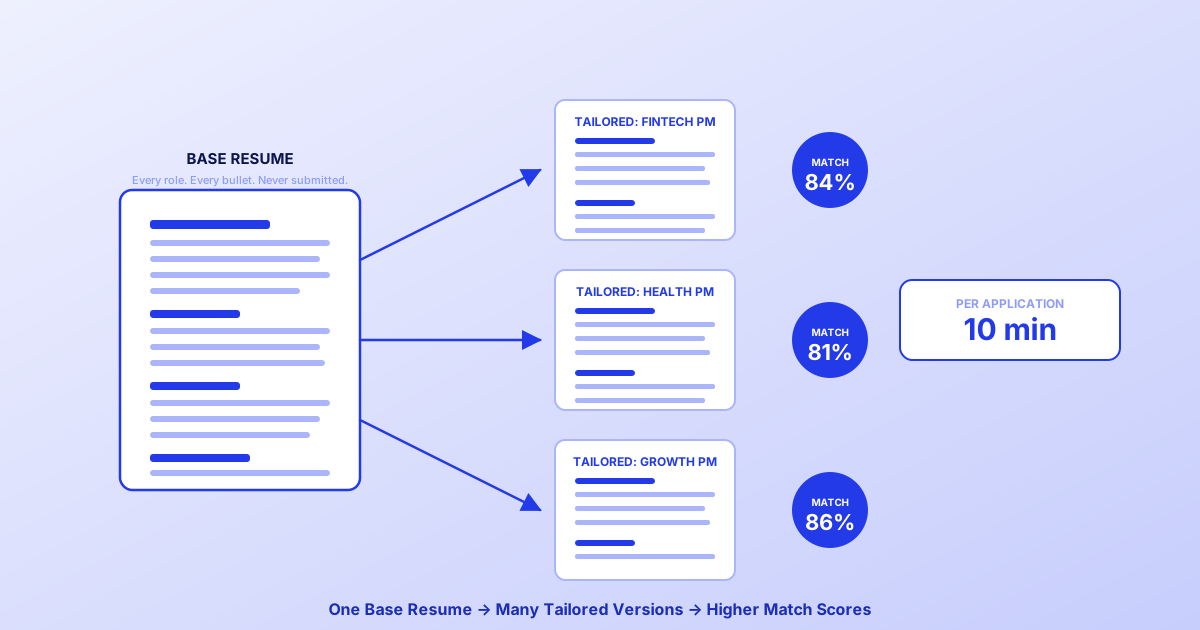
Here's the tradeoff most job seekers don't want to hear. Sending the same resume to fifty postings is one decision repeated fifty times. Tailoring fifteen is fifteen decisions, each one aimed at a specific reader and a specific software screen.
Same effort, spent differently. So why does almost no one tailor?
Because most people think "tailoring" means rewriting the whole resume from scratch. It doesn't. A well-designed tailoring workflow takes 8-10 minutes per application once you're set up — and turns generic submissions into targeted ones that actually get read.
This is the exact workflow.
The Base Resume Principle
The foundation of fast tailoring is a base resume — the master document you never submit. Your base resume contains everything: every role, every project, every bullet, every skill. It's longer than anything you'd send.
Think of it as a library. When you apply for a job, you pull a curated shelf from that library for that specific application. The library stays intact; the shelf changes every time.
Most people skip this step and try to tailor their "current resume" - a 1-2 page document that already cut most of their experience to fit. That's why tailoring feels slow and painful. You're not emphasizing from a rich source; you're rewriting from scratch.
Build a base resume with:
- Every job you've held in the last 10 years (or 15 for senior roles)
- 6-10 bullet points per recent role, 3-5 for older ones
- Every significant project, side initiative, or cross-functional effort
- Full skill inventory — technical, methodological, and domain
- Every metric you can substantiate
This document is internal. You'll never submit it. But it's the source material for every tailored version.
The 4-Section Tailoring Formula
Most of each tailored resume stays the same across applications: contact info, education, certifications, work history structure. Tailoring happens in four sections, which do almost all the work:
1. The Professional Summary (the highest-leverage edit)
This is the single highest-leverage section. Three lines at the top of the resume that tell the recruiter "this person is for this job."
For each application, ask: "If the recruiter only reads these three lines, what do they need to know?" Then write it using the exact language of the job posting.
Example: a PM with fintech and healthcare experience applying to a fintech role leads with fintech. Applying to a healthcare role, she leads with healthcare. Same candidate, same experience — different framing.
2. Top Skills / Core Competencies (a quick reorder)
List 8-12 skills at the top of the resume, prioritized by relevance to the target job. This section is ATS candy — it's where keyword matching does most of its work.
Pull the exact skill phrases from the job posting. If the job says "cross-functional collaboration," don't write "team collaboration." Match the phrase.
3. Bullet Emphasis (where most of the time goes)
Your work history bullets are where tailoring gets most of its lift. You don't invent new bullets — you reorder and re-emphasize the ones already in your base resume.
For each role, pick the 4-6 bullets most relevant to the target job. Put the most relevant one first. Rewrite the phrasing if the target job uses different language for the same work.
See what the software sees in your resume
Upload your resume for a free diagnosis. It is parsed the way an ATS parses it, read the way a recruiter reads it, and you get the fixes ranked by what moves your score.
Get my free diagnosisFree to try. No credit card required.
4. Projects or Achievements Section (a straight swap)
If you have a projects section, swap which projects appear based on the target role. It is the cheapest edit on this list and often the most visible one.
The 10-Minute Workflow
Once your base resume exists, here's the loop for each application:
Minute 0-2: Read the job posting carefully. Not skim. Read. Highlight required skills, preferred skills, and any specific phrases that appear more than once.
Minute 2-4: Write the summary. Three lines, using the exact phrasing of the top 2-3 requirements. This is the most important two minutes of the process.
Minute 4-6: Update the skills list. Pull 8-12 skills from your base resume, prioritized by their appearance in the posting. Match phrasing exactly.
Minute 6-9: Re-emphasize bullets. For each role, reorder bullets so the most relevant one is first. Rewrite 2-3 bullets to use the job's phrasing without changing the underlying fact.
Minute 9-10: Run an ATS check. Paste the tailored resume and job posting into a scanner. A low match score means you missed a requirement the posting cares about. A near-perfect one is its own warning: check that you haven't added claims you can't back up.
Submit, note the version, move on.
The "Tailor to the Title, Not the Job" Trap
One common mistake: tailoring only to the job title, not the actual job content.
Two "Senior Product Manager" roles at two different companies can require almost completely different skill sets. One might be a growth PM role heavy on experimentation. Another might be a platform PM role heavy on architecture. Same title. Different work.
Always tailor to the specific job posting. Not to the title. Not to the company. To the actual bullets in the requirements section.
What to Change vs. What to Keep
Use this table to decide what belongs in your tailoring pass:
| Section | Change per application? | Why |
|---|---|---|
| Contact info | No | Static |
| Summary | Yes — rewrite | Highest-leverage section |
| Top skills | Yes — reorder | ATS keyword matching |
| Work history (structure) | No | Factual |
| Bullet order within roles | Yes — reorder | Emphasis shift |
| Bullet phrasing | Partial — rewrite 2-3 | Match job language |
| Education | No | Static |
| Certifications | Sometimes | Promote if relevant |
| Projects | Sometimes | Swap based on role |
If you're changing more than that, you're not tailoring — you're rewriting. Rewriting is a sign your base resume isn't complete enough. Go back and build it out.
Base Resume vs. Tailored Resume: What Actually Changes
A base resume is the full record of your work, written once. A tailored resume is a selection from it, aimed at one posting. The facts never change between the two. What changes is which facts lead, which words describe them, and what gets left out.
In practice the differences come down to three edits:
- The summary names this job's needs. The base summary describes your career. The tailored summary names the two or three requirements the posting leads with and points to the experience that covers them.
- The skills section follows the posting. Same skills, reordered so the ones the posting asks for come first, written the way the posting writes them.
- Different bullets lead each role. The base resume keeps every bullet. The tailored version keeps the four to six that match this job and puts the strongest match first.
Here is one role before and after. The candidate is an operations analyst applying to a job that asks for "vendor management" and "stakeholder management."
Base resume, all six bullets:
- Managed weekly reporting for a team of 6 analysts
- Built the regional forecasting model used by finance
- Negotiated renewal terms with 4 data vendors, cutting annual spend by $120K
- Ran monthly reviews with finance and sales leads on forecast assumptions
- Onboarded and trained 3 new analysts
- Automated the month-end reconciliation in SQL, saving 2 days per close
Tailored version, four bullets:
- Led vendor management for 4 data providers, negotiating renewal terms that cut annual spend by $120K
- Ran monthly stakeholder reviews with finance and sales leads to agree forecast assumptions
- Built the regional forecasting model used by finance
- Automated the month-end reconciliation in SQL, saving 2 days per close
Nothing in the tailored version is new. The vendor bullet moved from third to first and now uses the posting's term. The review bullet now says "stakeholder," which is the word the posting uses for the same work. The two bullets about managing and training analysts were cut, because this job has no direct reports and they took space from experience the posting does ask for.
If an application asks you to explain the differences
Some applications and courses ask you to "share 2-3 of the most significant differences between your base resume and the version you tailored for a specific role." They want to see that you tailored on purpose. A strong answer names each change and the requirement behind it. For the example above:
- I rewrote my summary to lead with vendor management and forecasting, the first two requirements in the posting, instead of my general operations background.
- I moved my vendor negotiation bullet to the top of my current role and used the posting's term, "vendor management," because it is the core of the job.
- I cut two bullets about managing and training analysts. The role has no direct reports, so they took space from experience the posting asks for.
Each point follows the same pattern: what changed, and which part of the posting it answers. "I added keywords" is too vague to count. Say which keywords, and why that requirement matters for this role.
Batching Multiple Applications
If you're applying to multiple roles in the same week, batch smartly:
Group similar roles together. Five similar PM roles at different companies can share most of your tailoring. The summary changes slightly; the skills barely change.
Create role templates. If you repeatedly apply to the same type of role, save a mid-tier tailored version as a template. Next time, you start from the template, not the base.
Track which version you sent where. If you get an interview, you need to remember what version of the resume the recruiter has. A job tracker with version tagging prevents embarrassing mismatches in the interview.
See what the software sees in your resume
Upload your resume for a free diagnosis. It is parsed the way an ATS parses it, read the way a recruiter reads it, and you get the fixes ranked by what moves your score.
Get my free diagnosisFree to try. No credit card required.
What Tailoring Can't Fix
Tailoring shifts emphasis. It doesn't invent capability. If the job requires five years of Python and you have six months, tailoring won't bridge that.
The same goes for starting points. If you are changing fields, the layout matters as much as the wording; see the resume format for career changers. If you are writing your first resume, build the base resume from projects and coursework first with how to write a resume with no experience.
But most of the time, the gap isn't capability — it's positioning. Candidates have done the work; they just haven't framed it in the language of the job. Tailoring fixes positioning.
The candidates who get interviews aren't the most qualified ones. They're the ones whose resumes most clearly demonstrate qualification for the specific role. That's a positioning problem, and it's solvable.
Your Next Step
Building a base resume is a one-time 1-2 hour investment. After that, every application takes 10 minutes instead of an hour. Ten applications per week becomes achievable with quality.
Tools that pair a base-resume workflow with automated tailoring can compress this further — letting you start from your real experience and generate a targeted version per posting in under a minute. That's the kind of tool Kareeo is built to be. Scan a job posting, see where your resume matches and where it doesn't, and get a tailored version back — without inventing experience you don't have.
Tailor more. Apply less. Make each application count.
See what the software sees in your resume
Upload your resume for a free diagnosis. It is parsed the way an ATS parses it, read the way a recruiter reads it, and you get the fixes ranked by what moves your score.
Get my free diagnosisFree to try. No credit card required.
Frequently Asked Questions
- What is the difference between a base resume and a tailored resume?
- A base resume is the full record of your work, written once and never sent. A tailored resume is a selection from it aimed at one posting. The facts stay the same. What changes is the summary, the order and wording of your skills, and which bullets lead each role.
- Do I really need to tailor my resume for every job?
- Yes, but not the whole resume. Most of each resume stays identical across applications; the summary, top skills, and emphasis in bullets are what change. A tailored resume puts your real experience in the words the posting uses, so the software screen can actually find it.
- How long should tailoring each resume take?
- With a good base resume and a clear workflow, 8-10 minutes per application. The first tailoring takes longer because you're setting up your base resume. After that, each job becomes a quick override of the summary, skills, and 4-6 emphasized bullets.
- Can AI tools tailor my resume automatically?
- Yes, if you use one that understands your real experience. Good AI tailoring tools don't invent new experience — they re-emphasize what you've already done to match what the job requires. The key is that the tool has access to your full experience pool, not just the visible bullets on your current resume.
Related Articles
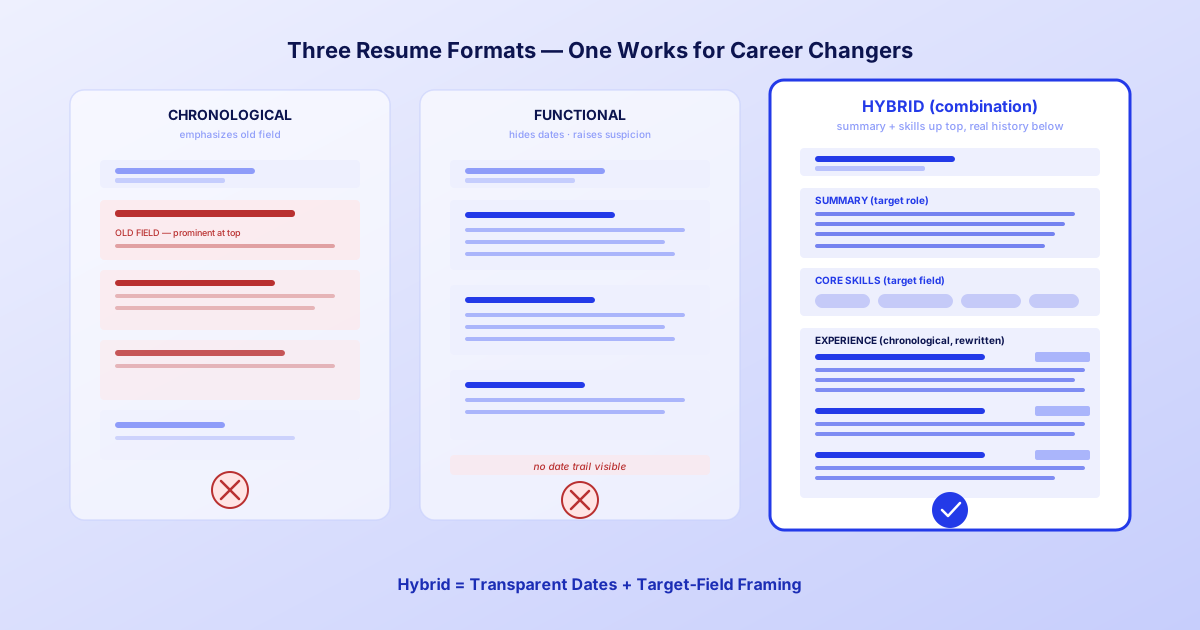
The Best Resume Format for Career Changers in 2026 (With Templates)
Functional resumes look like hiding. Chronological resumes emphasize the wrong thing. Here's the hybrid format that actually works for career changers — plus transferable-skill templates by transition type.
Kareeo Team9 min read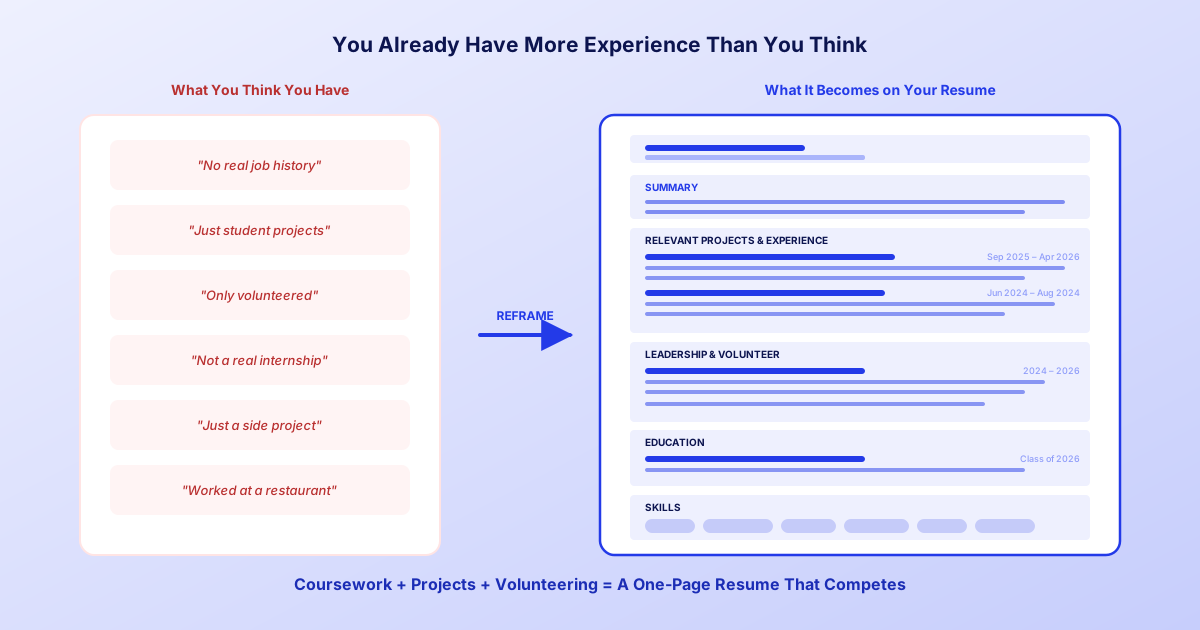
How to Write a Resume When You Have No Experience (2026 Guide)
You have more experience than you think. Here's how to build a credible, interview-getting resume from coursework, projects, volunteering, and freelance — with templates by field.
Kareeo Team9 min read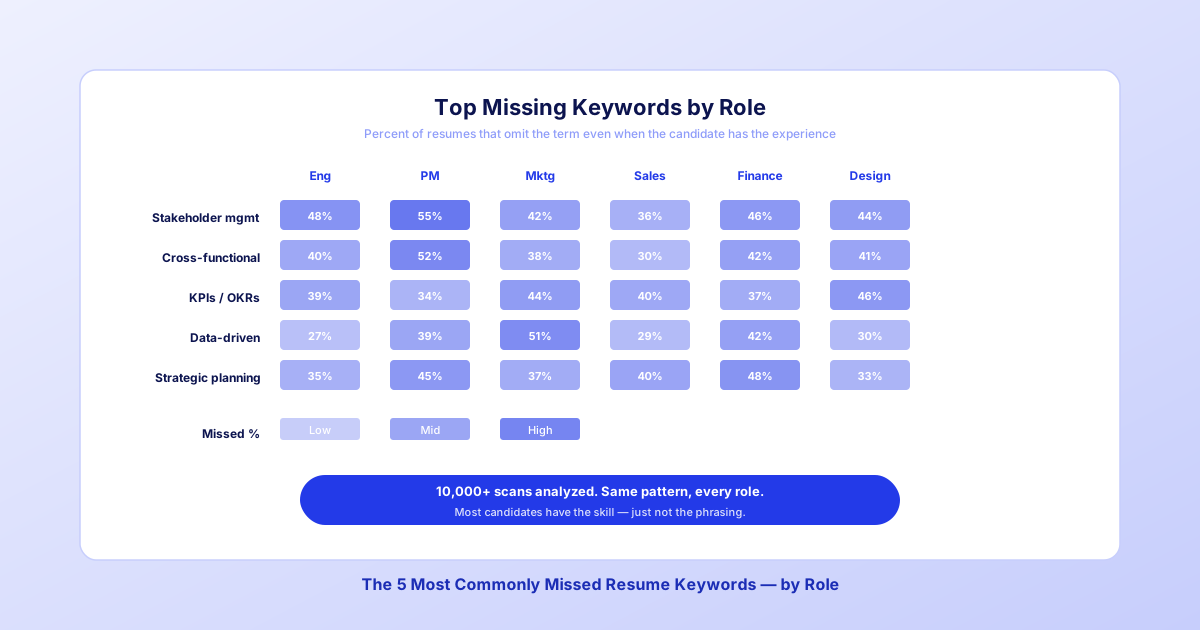
The Resume Keywords You're Probably Missing in 2026 (By Role)
The same keywords get missed across industries, usually by candidates who did the work. Here are 20 phrases job postings ask for that resumes rarely use.
Kareeo Team7 min read